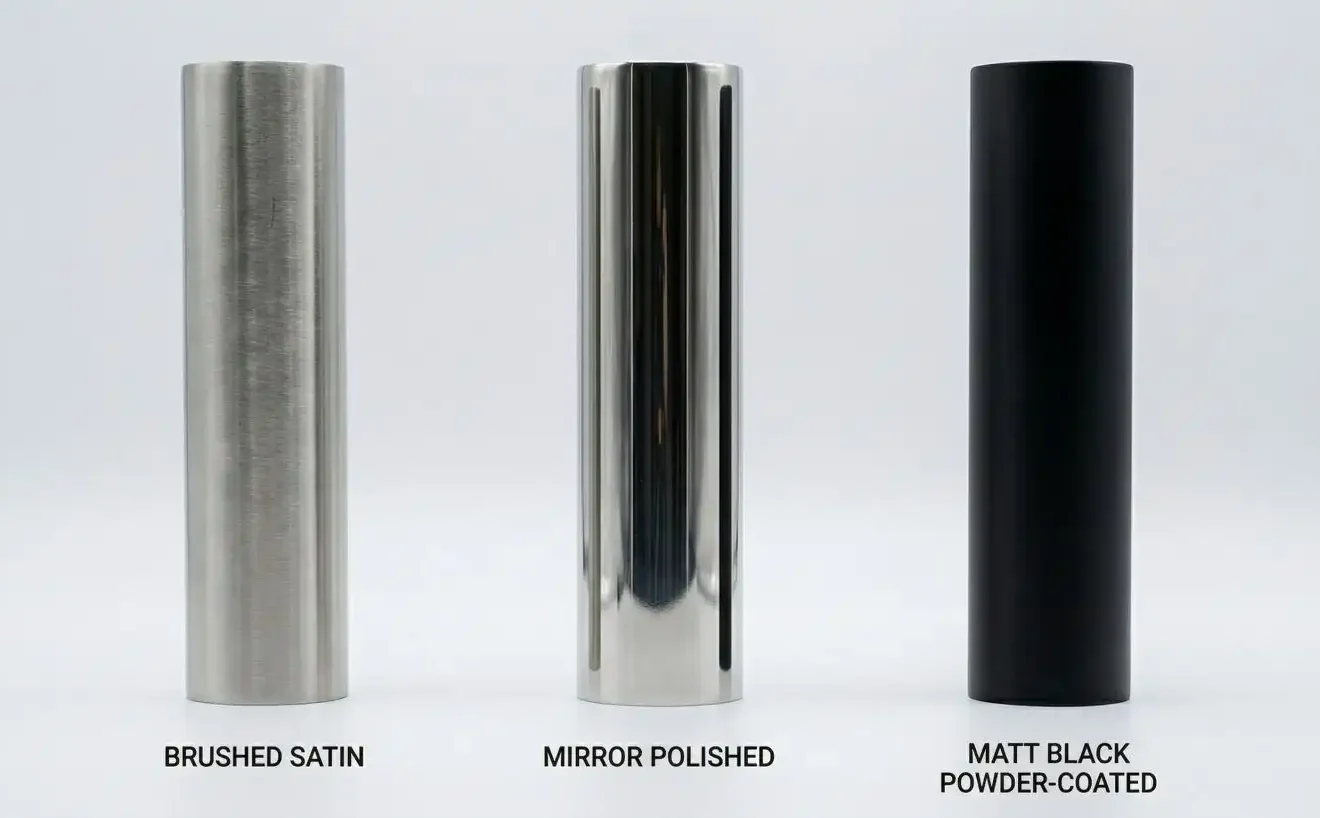
When you order stainless steel balustrade components, one of the first decisions you face is finish. Brushed satin, mirror polish, or Matt Black powder coat — each looks different, performs differently in different environments, and requires a different approach to maintenance. Getting this decision right from the start saves you from regret further down the line, particularly if your property is in a coastal or pool environment where the wrong finish choice leads to accelerated surface discolouration.
This guide covers all three finishes so you can choose with confidence before placing your order.
What Is Brushed Satin?
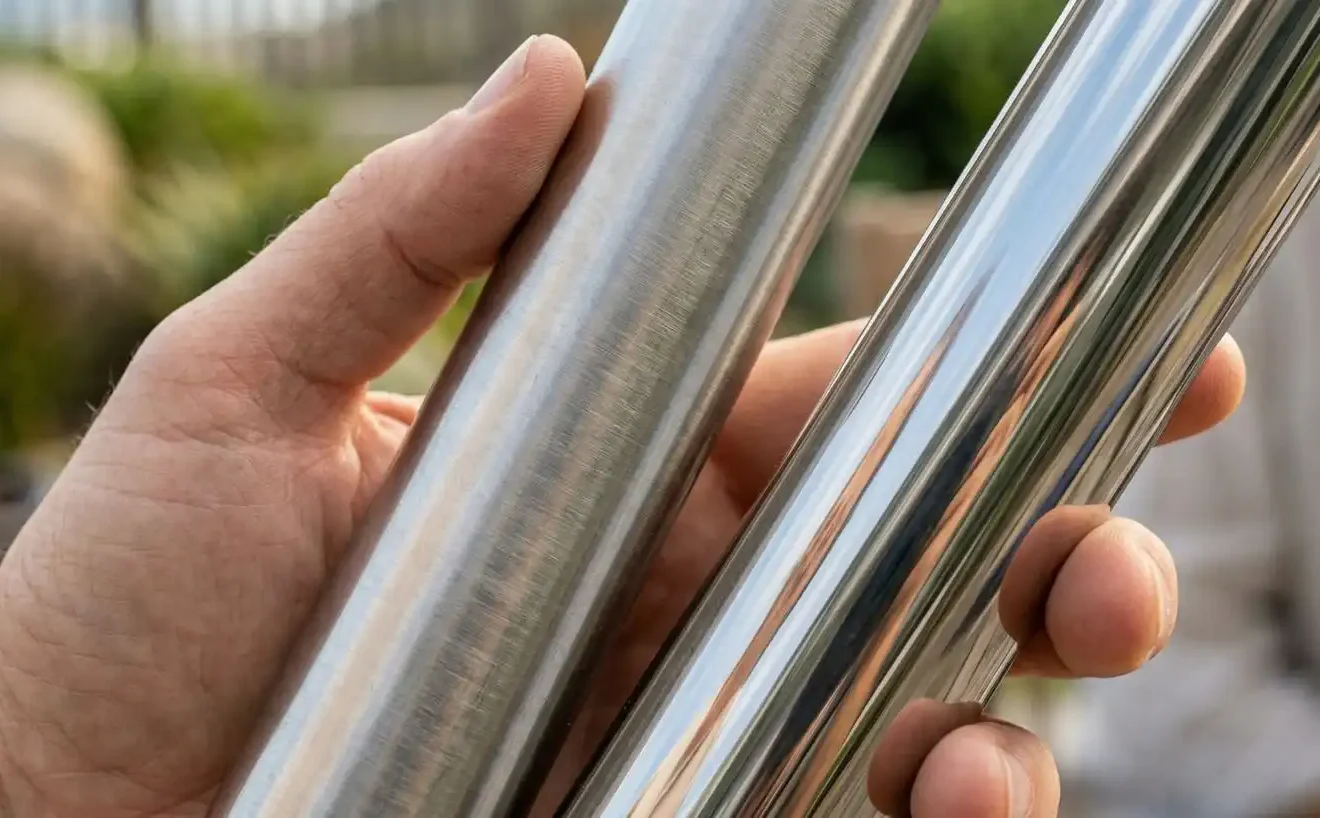
Brushed satin is the standard finish for stainless steel balustrade components and the most widely specified finish in South African residential installations. It is produced by polishing the steel with an abrasive belt moving in a single consistent direction, creating fine, uniform parallel grain lines across the surface — a process also documented in detail for brushed metal production. The result is a soft, matte-like sheen that diffuses light rather than reflecting it directly — not reflective in the way a polished surface is, but not completely flat either. Most people describe it as a contemporary, understated appearance that sits comfortably against a wide range of architectural styles and cladding materials.
The practical advantages of brushed satin
The directional grain of a brushed satin finish is its greatest practical strength. Minor surface marks — light scratches, scuffs from installation, or the occasional knock — are naturally concealed by the grain lines and tend to blend in rather than stand out. This makes brushed satin the most forgiving finish for high-use outdoor environments. Cleaning along the grain direction with a Scotch-Brite pad or soft cloth removes most everyday marks without any risk of damaging the finish, which is not something you can say about a mirror-polished surface.
Brushed satin is also the most cost-effective finish. It requires less processing than mirror polish and no additional coating, so it carries no premium over the base component price.
The limitations of brushed satin
The same grain lines that hide minor scratches also trap particles, salt deposits, and airborne contaminants. The grooves of the finish can accumulate chloride ions, which break down the chromium oxide passivation layer of the steel — the thin protective film that gives stainless steel its corrosion resistance. In coastal environments — particularly within approximately 5km of the shoreline, where salt air is persistent — this leads to the surface discolouration known as tea staining. Tea staining is a brownish cosmetic deposit on the surface of the steel. It does not affect structural integrity, but it noticeably affects appearance and can be stubborn to remove once established. For properties in coastal and pool environments, mirror polish is the more appropriate choice for long-term appearance.
What Is Mirror Polish?
Mirror polish is produced by working through progressively finer abrasive grades — beginning with pre-grinding to remove surface imperfections, then polishing through finer and finer grits, and finishing with a buffing pass using a polishing compound. The result is a smooth, highly reflective surface that is significantly more resistant to corrosion than a brushed finish, because the smooth surface has no grooves for contaminants to collect in. The finish has a distinctly premium character that makes it the choice for high-end residential projects and installations where the balustrade is intended to be a visual feature rather than a background element.
The practical advantages of mirror polish
Because the surface is smooth with no directional grain, airborne particles, salt, and contaminants have nowhere to collect — they sit on top of the surface and are easily wiped away. This is why mirror polish is the recommended finish for coastal properties and pool surrounds, where tea staining is a persistent risk for brushed satin components. The smoother surface significantly reduces chloride accumulation, extending the time between cleaning cycles and substantially reducing the risk of surface discolouration.
Grade selection remains equally important regardless of finish. For coastal properties and pool surrounds, 316 Marine Grade is always required across all components irrespective of whether they are brushed satin or mirror polished.
The limitations of mirror polish
The highly reflective surface that resists salt accumulation outdoors also shows fingerprints, smudges, and minor marks very clearly. A mirror-polished handrail that is regularly touched will need more frequent wiping than a brushed satin one. Glass cleaner or a mild detergent on a soft cloth removes fingerprints effectively, but the cleaning cycle is noticeably more frequent than with brushed satin — particularly in sheltered indoor positions where the surface does not get natural rain washing.
Mirror polish also carries a price premium over brushed satin — typically 15–25% more per component. Scratches on a mirror-polished surface are immediately visible and cannot be addressed without working back through multiple abrasive grades — a process that requires specialist equipment and is not a DIY repair. This is a significant practical consideration for balustrades in high-traffic or high-contact locations.
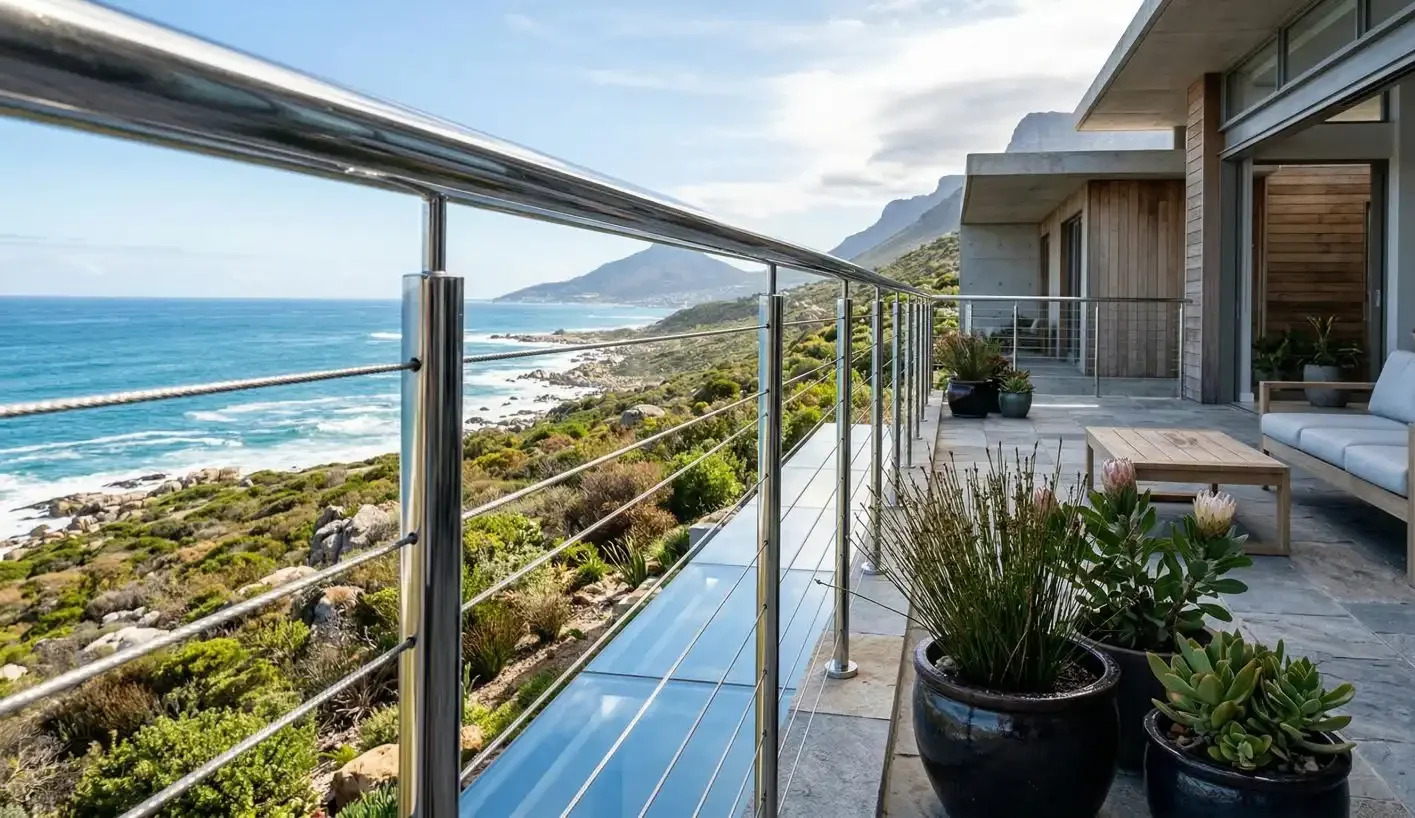
Coastal Suitability: Matching Your Finish to Your Environment
The environment your balustrade lives in should drive the finish decision, not aesthetics alone.
Inland, non-coastal properties: Brushed satin is the practical standard. With regular cleaning every three to four months — wiping along the grain direction with a mild detergent and soft cloth — it will maintain its appearance reliably for years. The directional grain conceals everyday marks and minor scratches far more effectively than a smooth polished surface.
Coastal properties within approximately 5km of the shoreline: Mirror polish is strongly recommended over brushed satin. The smoother surface significantly reduces chloride accumulation, extending the time between cleaning cycles and substantially reducing the risk of tea staining. 316 Marine Grade is non-negotiable for all components in coastal environments.
Pool surrounds: Pool water contains chlorine which behaves similarly to salt air in its effect on stainless steel surfaces. Mirror polish and 316 Marine Grade are both strongly recommended for pool fencing and pool-adjacent balustrades, whether the property is coastal or inland. Tea staining is a cosmetic risk in chlorine environments just as much as in coastal ones, making finish selection as important as grade selection.
What Is Matt Black?
Matt Black is a powder-coated finish applied over a 304 or 316 stainless steel substrate — the same professional-grade steel used for brushed satin and mirror polish components, with a dry powder electrostatically applied and oven-cured over the top for colour. All Balustrader Matt Black components use a stainless steel substrate — never mild steel or aluminium — which matters enormously for outdoor durability. Where the powder coat is damaged by chips or scratches, a stainless steel substrate will not rust through the way a mild steel core would, making it a significantly more forgiving base for an outdoor-coated product.
Matt Black has become one of the most searched balustrade finishes in South African residential design. The contrast of a flat black railing against white walls, light render, or warm timber decking has become a defining aesthetic of contemporary Cape Town and coastal architecture. From a maintenance standpoint, Matt Black requires more attention than either silver finish — chips and scratches in the powder coat expose the substrate beneath and should be treated promptly with a touch-up pen. Abrasive cleaning products must never be used on a coated surface. The finish carries a premium of approximately 15–25% over brushed satin.
Side-by-Side Comparison
| Brushed Satin | Mirror Polish | Matt Black | |
| Appearance | Soft directional sheen | High-gloss, mirror-like | Flat black, bold contrast |
| Coastal suitability | Not recommended coastal | Recommended for coastal | Grade & formulation dependent |
| Fingerprints | Low visibility | Shows clearly | Low visibility |
| Scratches | Concealed by grain | Visible, professional re-polish needed | Chips expose substrate |
| Maintenance | Lower — grain hides marks | Easy outdoors, more indoors | Avoid abrasives throughout |
| Cost vs satin | Base price | +15–25% | +15–25% |
| Best for | Most inland applications | Coastal, pool, premium | Contemporary design focus |
Which Finish Should You Choose?
For most South African DIY homeowners installing a deck, balcony, or staircase balustrade at an inland property, brushed satin is the right choice. It is the most practical, the most forgiving in everyday use, and the most cost-effective. It is what the majority of professional installers specify for non-coastal environments.
If your property is within approximately 5km of the coast, or if you are installing pool fencing anywhere in the country, mirror polish is worth the modest premium. The smoother surface gives tea staining far less opportunity to establish, and the long-term maintenance advantage in salt and chlorine environments is real and significant.
If the design is the primary consideration — your project is contemporary, the balustrade is a prominent visual feature, and you want something that coordinates with black window frames or architectural hardware — Matt Black is the natural direction, provided you are prepared for a more disciplined maintenance approach.
If you are unsure which finish suits your project, contact us before ordering. Getting the finish right from the start is far simpler than revisiting it after manufacture. Getting the finish right from the start is far simpler than revisiting it after manufacture.
Contact us: sales@balustrader.co.za | +27 64 044 1440 | www.balustrader.co.za | Mon–Fri 08:00–17:00
| Not sure which finish suits your project? Get a free DIY Estimate at www.balustrader.co.za |


