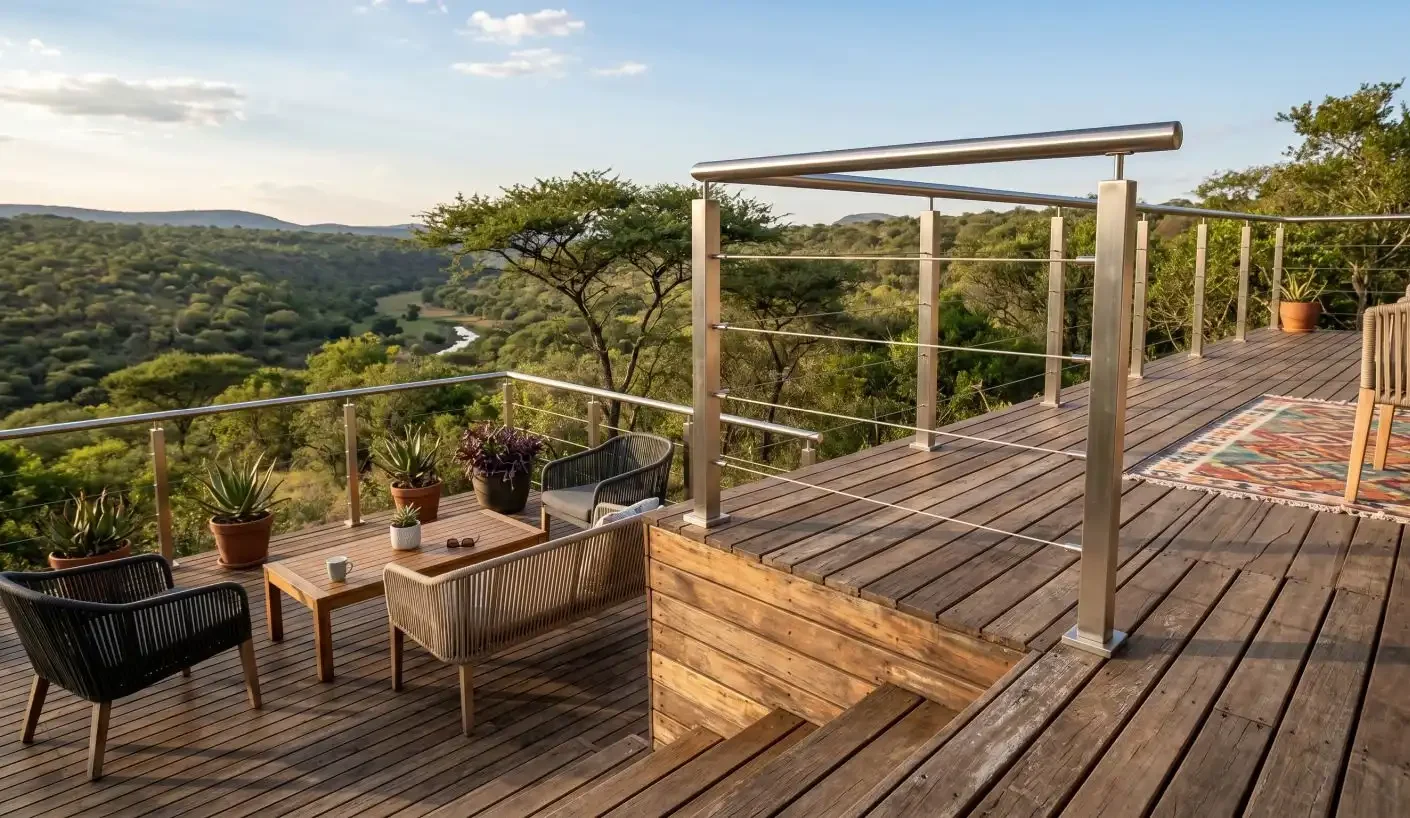
If you have looked at stainless steel balustrades in South Africa, you have almost certainly seen brushed satin — the muted, silver-grey finish with fine parallel lines running along the length of every tube and fitting. It is the default choice for most residential projects, and with good reason. But knowing why it works, where it works best, and how to maintain it properly will help you get decades of clean, consistent results out of your balustrade rather than years of frustration.
What is brushed satin?
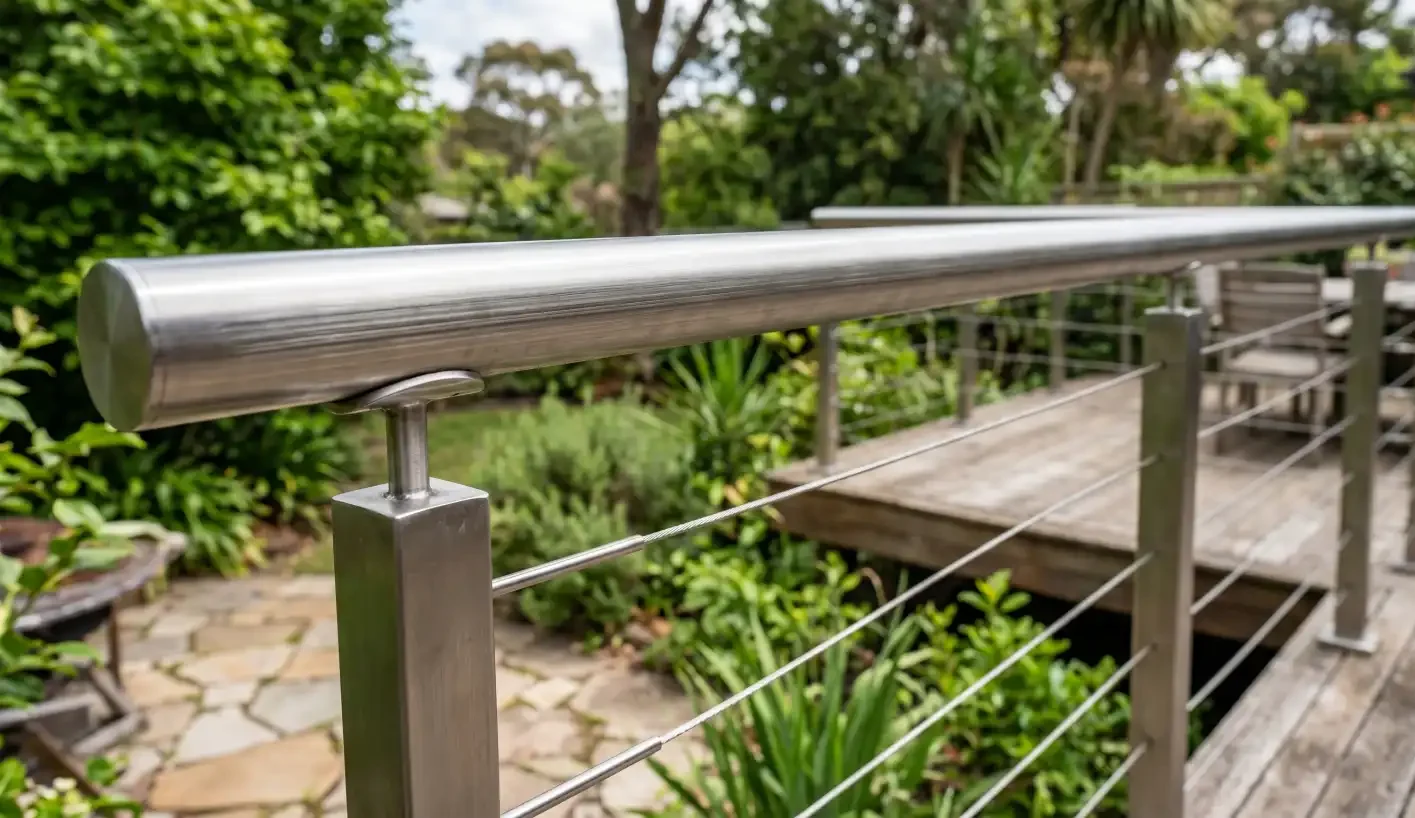
Brushed satin gets its distinctive appearance through a mechanical abrasion process. During manufacture, the stainless steel tube or sheet is passed against abrasive belt production process — typically between 80 and 180 grit — running in a single consistent direction. This creates the fine parallel grain lines that define the finish. A secondary pass with a finer abrasive then softens the texture to produce the smooth, satin-matte appearance you see on finished components.
The result is a surface that reflects light softly rather than sharply, giving it a clean, contemporary look without the high-maintenance demands of a mirror polish. The micro-texture created by the brushing process also means that minor handling marks and light surface scratches tend to blend into the grain pattern rather than show up as obvious scuffs.
Why brushed satin is the most popular choice
Several practical advantages have made brushed satin the standard practical choice for non-coastal outdoor use. It is forgiving to install — small tool marks or handling scuffs during the build process simply disappear into the grain. It does not show fingerprints or water spots as readily as a polished surface. And because minor scratches can often be worked out with a Scotch-Brite pad running along the grain direction, it is more repairable than a mirror finish without professional intervention.
For a typical South African deck, balcony, or staircase project — especially in an inland or non-coastal suburb — brushed satin on 304 grade stainless steel is usually the right answer. The combination of aesthetic versatility, low maintenance under normal conditions, and cost-effectiveness is hard to beat. It sits comfortably in both contemporary and traditional settings without looking out of place.
Where brushed satin works best
Brushed satin performs at its best in dry, inland, and non-coastal environments. Homes in Johannesburg, Pretoria, the Winelands, the Cape interior, and inland Western Cape suburbs are ideal settings. In these environments, the finish requires only routine cleaning to maintain its appearance over many years.
It is also well-suited to covered or semi-covered areas such as interior staircases, covered balconies, and undercover decks, where it has limited direct exposure to rain and humidity.
The coastal limitation
Where brushed satin requires more careful consideration is in coastal and pool environments. The grain grooves that give the finish its characteristic appearance can also grain grooves accumulate chloride particles from salt air and pool water. Chloride that settles in the grain and remains in contact with the steel surface is what initiates tea staining — the orange-brown discolouration that is cosmetic in nature but unsightly if left untreated.
Within the 5km coastal rule — that is, any property within approximately 5km of the shoreline, or any project adjacent to a pool — the correct grade is 316 Marine Grade rather than 304. The higher molybdenum content in 316 Marine Grade provides meaningfully better resistance to chloride attack. The finish choice — brushed satin, mirror polish, or Matt Black — is a separate decision, but the grade decision must come first.
How to clean brushed satin correctly
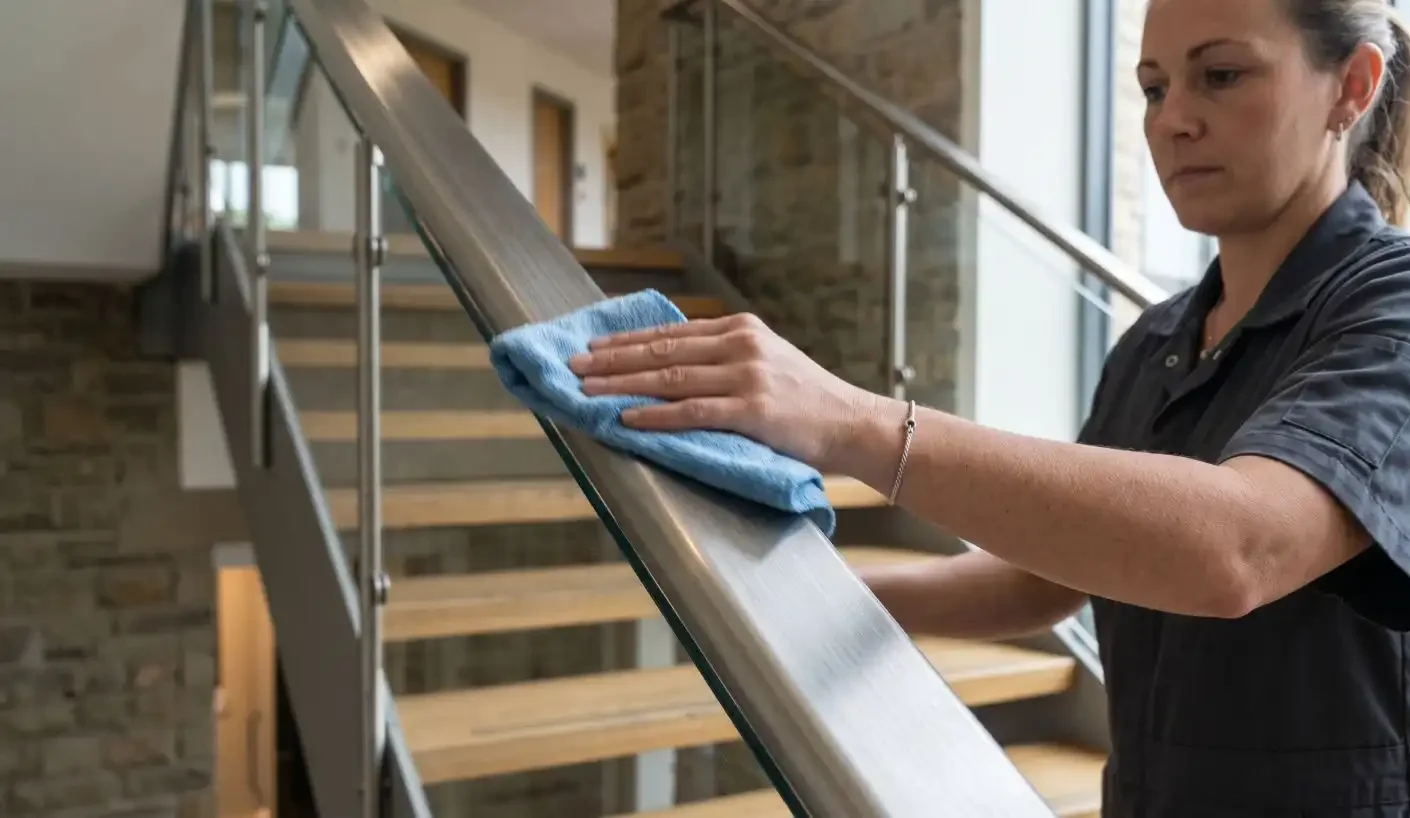
The critical rule when cleaning brushed satin is always to always clean along the grain direction. Wiping across the grain pushes dirt and particles into the grooves rather than lifting them out, and can create visible cross-grain scratches that stand out against the linear texture.
Use warm water and a small amount of mild detergent with a soft cloth or sponge. Rinse thoroughly and dry immediately — this is especially important in coastal areas where standing water accelerates chloride-related issues. For stubborn marks, a Scotch-Brite pad used along the grain will usually clear them without damaging the finish.
Never use bleach or steel wool on brushed satin — bleach compromises the passive oxide layer that protects the steel, and steel wool particles embed in the surface and cause rust spots. If your balustrade is near the coast or a pool, increase your cleaning frequency to at least once a month to prevent salt or chlorine accumulation in the grain.
Scratch repair on brushed satin
Minor surface scratches that run along the grain direction are barely visible on a brushed satin finish and rarely need attention. A scratch running across the grain is more noticeable — a Scotch-Brite pad used carefully along the grain can often reduce or blend it in, though results depend on the depth of the scratch.
Deeper scratches that have broken through the surface are more difficult to address. Attempting to work them out at home risks creating an uneven patch that looks worse than the original scratch. Full scratch repair requires working back through multiple abrasive grades to achieve a consistent surface, which is a professional job in most cases.
Compliance
The finish you choose for your balustrade has no effect on SANS 10400-M compliance. Height, infill spacing, structural fixings, and load requirements are what determine whether a balustrade meets South African building regulations — not the surface treatment applied to the tube. Choose the finish for aesthetic and maintenance reasons, and deal with compliance requirements separately.
Have a project in mind? Contact the Balustrader team at sales@balustrader.co.za or call +27 64 044 1440 (Mon–Fri, 08:00–17:00).
| Ready to Start Your Project? Get a free DIY estimate and find out exactly what you need. Tell us your project dimensions and we’ll put together a complete component list. www.balustrader.co.za |


