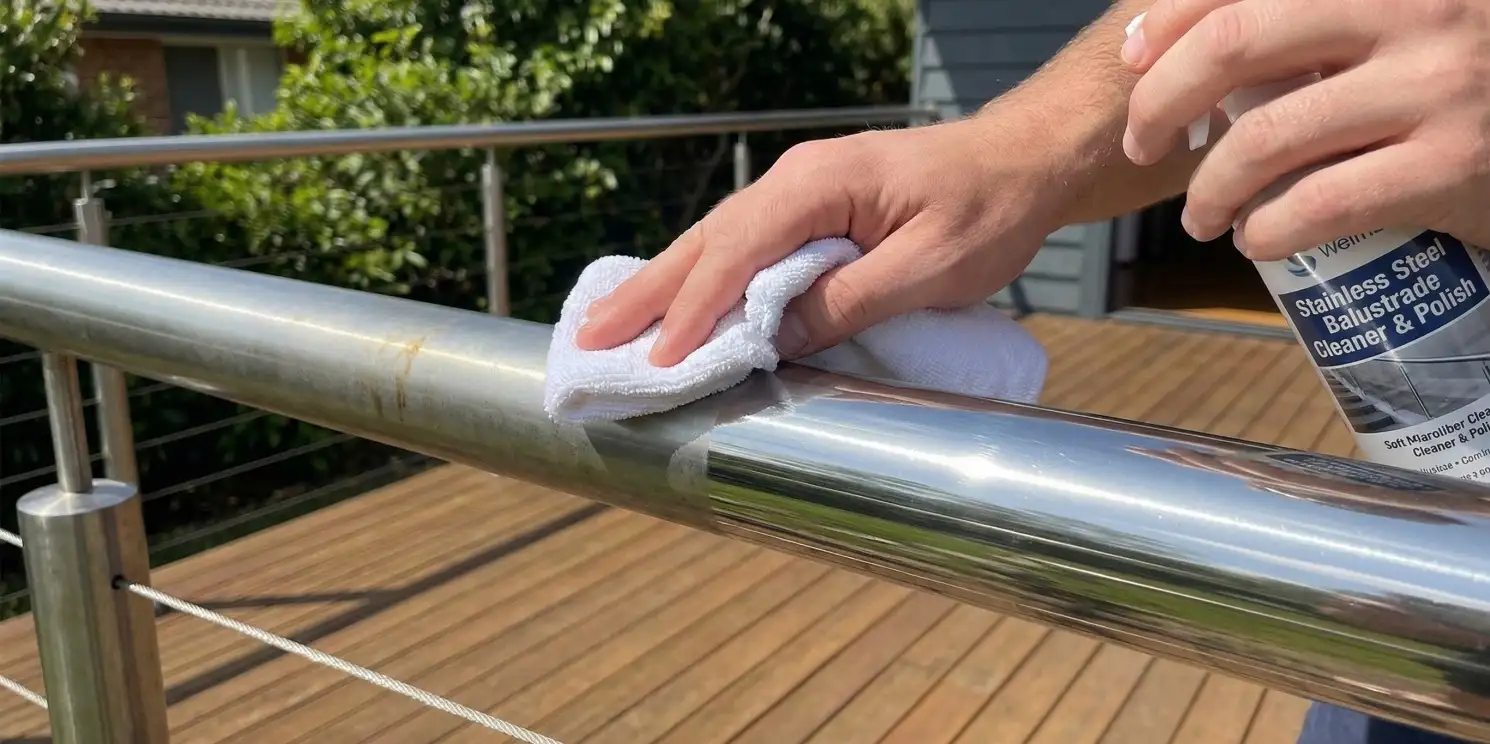
One of the most common misconceptions about stainless steel is that it is completely maintenance-free. The word ‘stainless’ implies imperviousness to marking and corrosion — but in reality, stainless steel requires periodic cleaning and care to maintain its appearance and long-term performance, particularly in the outdoor environments where balustrades are most commonly installed.
The good news is that maintaining a stainless steel balustrade is straightforward, requires no specialist equipment, and takes very little time when done regularly. Here is everything you need to know.
Why Stainless Steel Needs Cleaning
Stainless steel’s corrosion resistance comes from a thin, passive chromium oxide layer on its surface. This layer is self-repairing under normal conditions — but it can be compromised by surface contamination. Common culprits include:
- Salt deposits — particularly on coastal properties where salt-laden air settles on surfaces
- Iron contamination — from steel swarf, wire wool, or nearby rusting metal, which can cause surface rust spots on otherwise sound stainless steel
- Chlorine compounds — from pool water splash or coastal air, which attack the passive layer over time
- Organic deposits — bird droppings, plant sap, and general organic matter, which hold moisture against the surface
- Fingerprints and body oils — cosmetically unappealing and, if left long-term, can cause mild surface marking
Regular cleaning removes these contaminants before they have time to cause damage, keeping the passive layer intact and the surface looking its best.
Routine Cleaning: What You Need
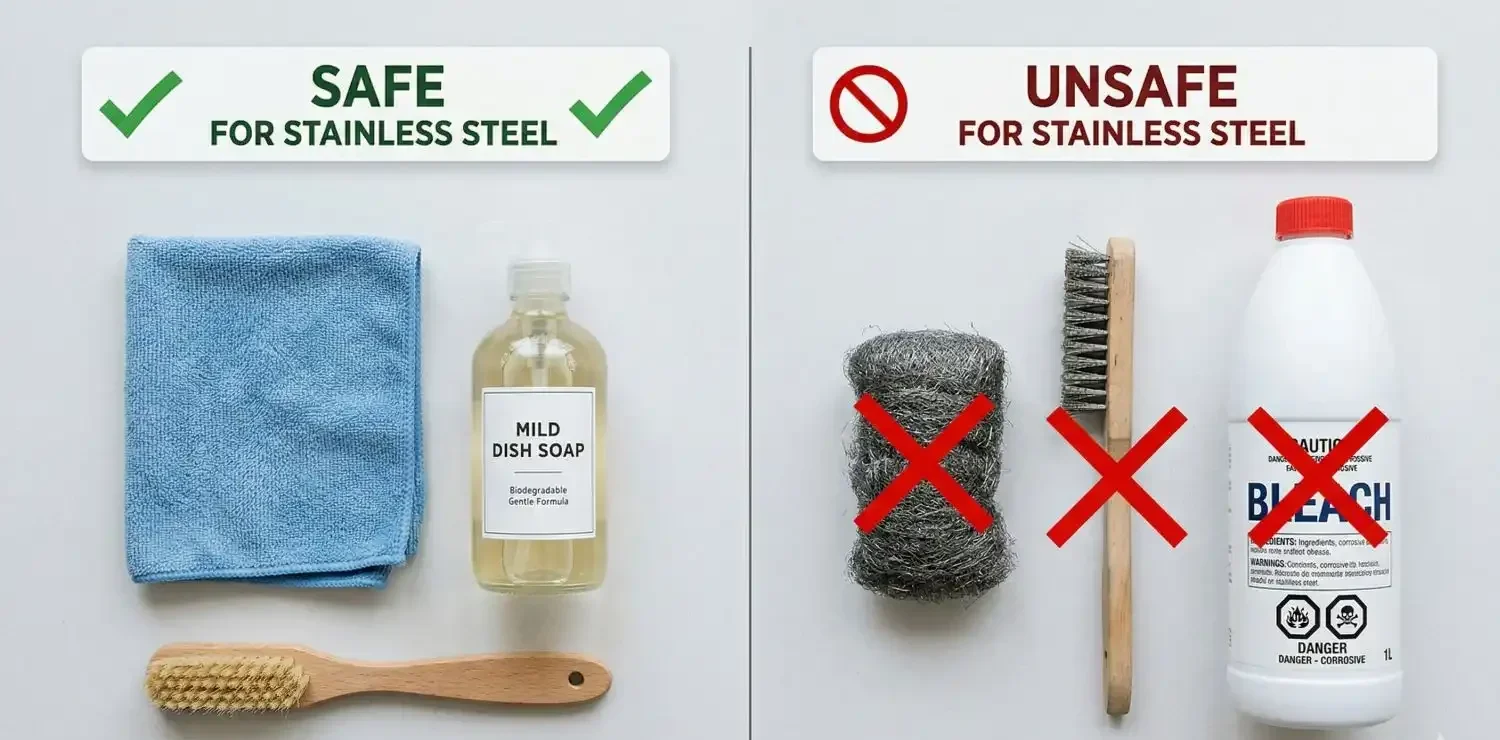
- Warm water and a small amount of mild dish soap or a dedicated stainless steel cleaner
- A soft cloth, microfibre cloth, or soft-bristle brush — never steel wool or abrasive pads
- A clean dry cloth for buffing dry after washing
- Stainless steel passivator or protective oil (optional, but recommended for coastal properties)
Step-by-Step Routine Cleaning
- Rinse the balustrade with clean water to remove loose dust and salt deposits. A garden hose on a gentle setting works well — avoid high-pressure washing as it can force water into joints and fixings.
- Apply your cleaning solution with a soft cloth, working in the direction of the grain (the fine linear polish marks visible on brushed satin finishes). Working against the grain can cause micro-scratches that dull the finish over time.
- For tube surfaces, wrap the cloth around the tube and work along its length rather than scrubbing in circles.
- Rinse thoroughly with clean water, ensuring no soap residue remains — dried soap can leave marks.
- Dry immediately with a clean cloth. Air-drying allows water to evaporate and leave mineral deposits, particularly in hard water areas.
- Optionally apply a thin coat of stainless steel protective oil or passivator, buffing to a clean finish. This adds a protective barrier that slows the redeposition of salt and organic material.
How Often Should You Clean?
| Environment | Recommended Frequency |
| Inland, low-exposure (Johannesburg, Pretoria, etc.) | Every 3–6 months |
| Inland, higher humidity or industrial area | Every 2–3 months |
| Coastal, sheltered (not directly sea-facing) | Monthly |
| Coastal, directly sea-facing or high salt air exposure | Every 2–4 weeks |
| Pool surrounds (any location) | Monthly minimum |
Dealing With Surface Rust Spots
If you notice orange or brown rust spots on your stainless steel balustrade, do not panic — this is usually surface contamination from iron particles from nearby cutting or grinding operations that have settled on the surface and begun to rust, rather than corrosion of the stainless steel itself.
- Apply a dedicated stainless steel rust remover or a paste of baking soda and water to the affected area.
- Leave for the recommended dwell time (follow the product instructions).
- Gently work the paste into the affected area with a soft cloth, working with the grain.
- Rinse thoroughly and dry.
- Apply a passivator to restore and reinforce the passive layer.
If genuine pitting corrosion is present — small holes or pits in the steel surface rather than surface staining — this typically indicates that the wrong grade of stainless steel was installed for the environment (304 in a coastal or pool setting, for example). In this case, affected sections may need to be replaced. Contact us for advice.
Mirror Polish vs Brushed Satin: Does Maintenance Differ?
Mirror polished finishes show fingerprints and water marks more readily than brushed satin, requiring more frequent wiping down in high-traffic areas such as handrails. However, they are no more or less susceptible to corrosion — the difference is purely cosmetic maintenance.
Brushed satin finishes are generally easier to maintain in outdoor environments as the directional grain disguises minor marks and makes re-polishing straightforward. They are the more practical choice for most residential balustrade applications. practical choice for most residential balustrade applications.
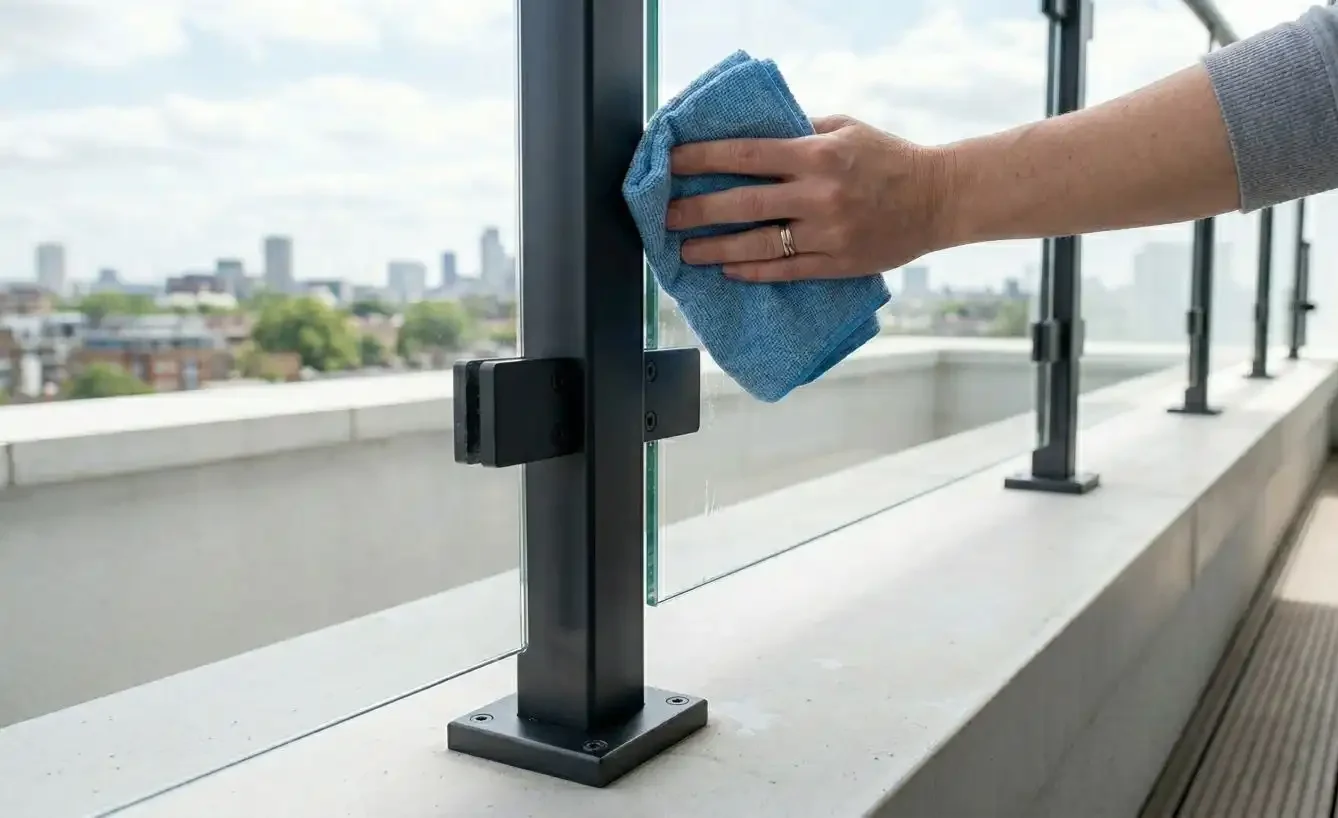
Maintaining Your Matt Black Finish
Matt Black balustrade components require a slightly different maintenance approach to bare stainless steel finishes. Because the surface is powder-coated rather than bare metal, the rules around what you use and how you use it matter more — the coating itself needs protection, not just the substrate beneath it.
Routine cleaning
The cleaning principle is the same as for brushed satin and mirror polish: warm water, a mild pH-neutral dish soap, and a soft cloth or microfibre cloth. Inspect the surface every six months at minimum — more frequently on coastal properties or in areas with high traffic. During your inspection, look for chips, scratches, and any signs that the coating is lifting at edges or fixings.
Wipe down with a damp cloth to remove dust and surface deposits first, then apply your mild soap solution with a soft cloth using gentle, linear strokes. Rinse with clean water and dry immediately with a soft cloth. Do not allow soap or water to dry on the surface — on a flat black finish, dried water spots and soap residue are more visible than on a silver stainless surface.
Chips and scratches — act promptly
This is the most important maintenance task specific to Matt Black. Where the powder coat is chipped or scratched, the substrate beneath is exposed. Balustrader Matt Black components use a stainless steel substrate, so the exposed area will not rust through in the way a mild steel core would — but the chip should still be treated promptly to prevent moisture ingress and to maintain the appearance of the finish. Use a colour-matched touch-up pen on small chips and scratches. Clean and dry the affected area thoroughly before applying, and allow the touch-up to cure fully before the surface is exposed to rain or moisture.
UV exposure and chalking
Over time, prolonged UV exposure can cause powder coat finishes to chalk — a process where the coating’s resin and pigment particles gradually lose adhesion, resulting in a faded or slightly powdery surface appearance. In South Africa’s high UV environment, this is worth being aware of, particularly on north-facing installations that receive full daily sun exposure. Regular cleaning removes the chalky layer as it forms and significantly extends the life of the finish. A light application of non-abrasive car wax or a protective coating after cleaning provides an additional barrier against UV degradation.
What to avoid on Matt Black
- Never use abrasive cleaning pads, scouring cloths, or steel wool — these will scratch and dull the powder coat surface
- Never use solvent-based cleaners, acetone, or petroleum-based products — these can strip or soften the coating
- Never use bleach or chlorine-based cleaning products
- Avoid high-pressure washing directly on joints and fixings
- Do not use compound-type waxes — use only non-abrasive wax or protective sealant
What to Avoid
- Never use steel wool, wire brushes, or abrasive cleaning pads — these leave iron particles embedded in the surface that will rust
- Never use bleach or chlorine-based cleaners directly on stainless steel
- Avoid leaving wet cloths or rubber mats in contact with the surface long-term — these trap moisture and can cause staining
- Never use acid-based cleaners (including some bathroom cleaners) on stainless steel
Products We Recommend
For routine cleaning, any dedicated stainless steel cleaner available from hardware stores is appropriate. For coastal properties, we specifically recommend a product with a passivating agent that restores the chromium oxide layer after cleaning. For Matt Black components, a non-abrasive car wax or clear sealant applied after each clean helps protect the powder coat from UV exposure and moisture ingress. Our team can advise on specific product recommendations for your environment — contact us at sales@balustrader.co.za or call +27 64 044 1440.
| Questions about maintaining your balustrade? Contact our team at www.balustrader.co.za |


