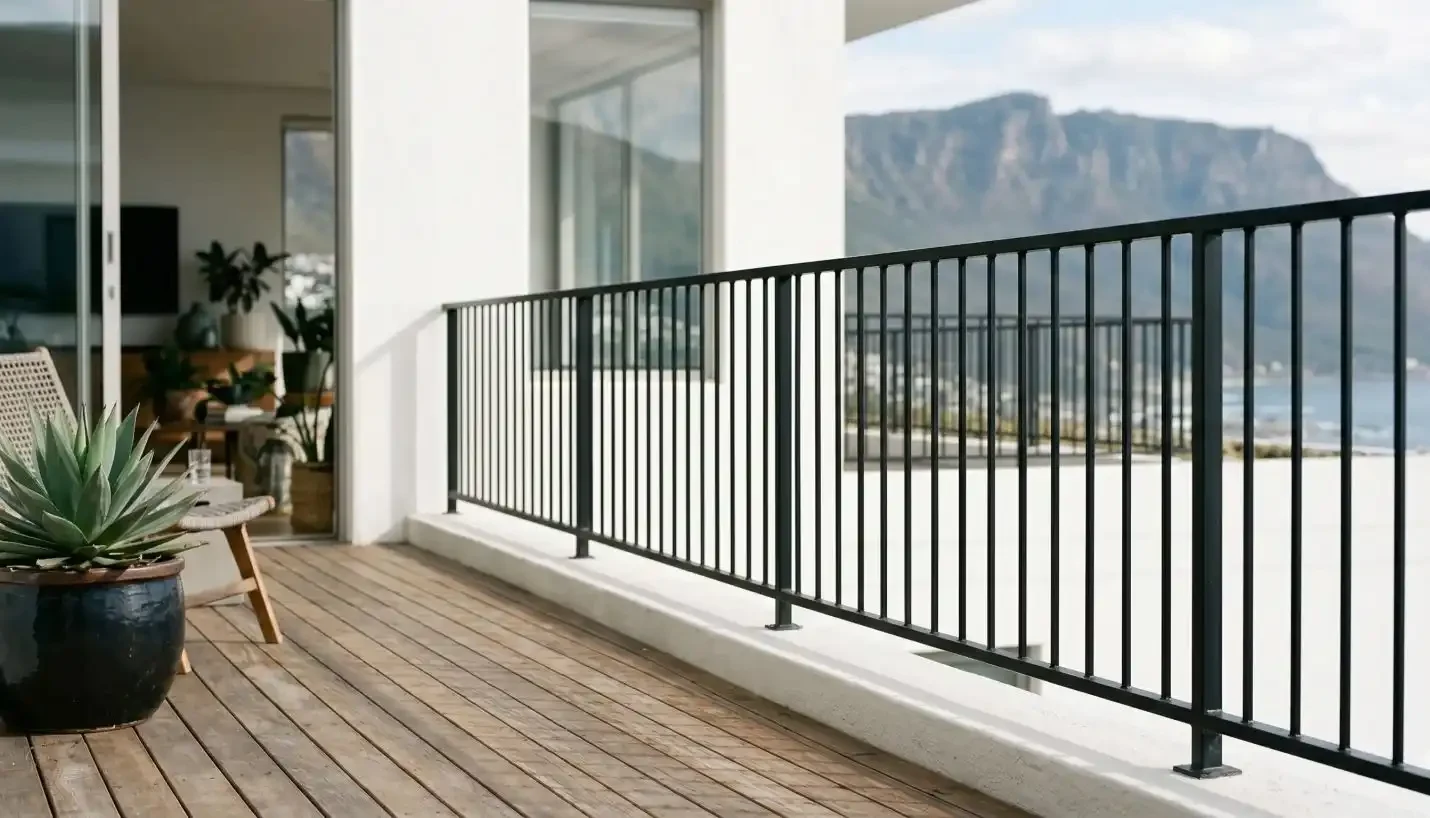
Matt Black has become one of the most requested finishes in South African residential design over the past decade. Against white render, raw timber decking, or Bushveld stone, it creates a bold, clean contrast that both brushed satin and mirror polish cannot achieve. But Matt Black components work differently from standard stainless steel finishes, and understanding that difference is essential before you buy.
What is Matt Black?
Matt Black is a powder coating process applied to the surface of stainless steel tube and components. All Matt Black components from Balustrader use a stainless steel substrate — the tube or fitting underneath the coating is stainless steel, not mild steel. This matters far more than it might seem.
The electrostatic application and oven curing process works as follows: the stainless steel component is cleaned and surface-prepared to promote adhesion, then electrostatically charged powder particles are sprayed onto the grounded component. The charge causes the powder to adhere uniformly to the surface. The coated component then enters a curing oven, where the powder melts, flows, and cross-links chemically into a hard, continuous film. The result is the flat, non-reflective black surface you see on finished Matt Black components.
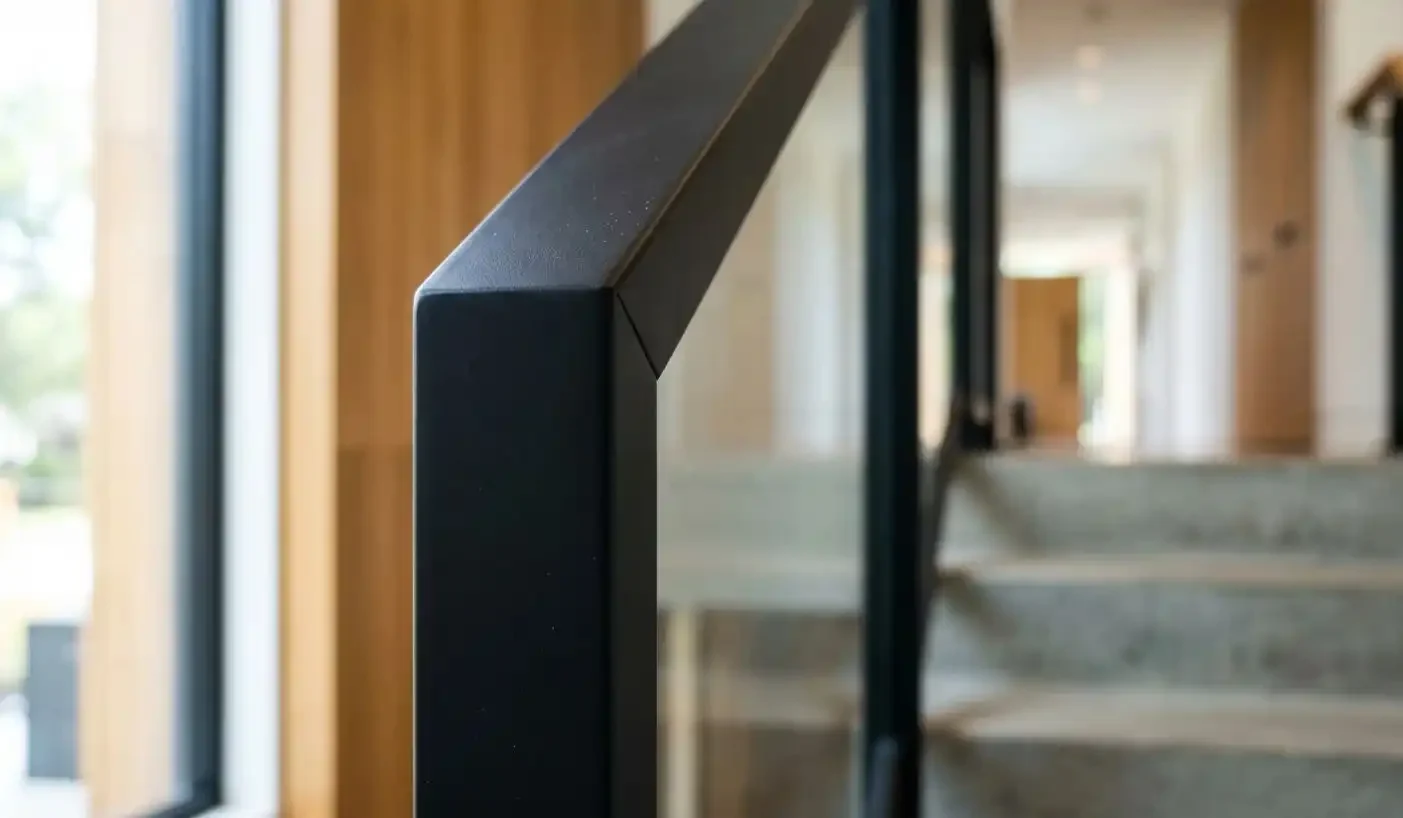
Why the stainless substrate matters
Not all Matt Black balustrade components on the market are built on a stainless steel substrate. Some cheaper alternatives use mild steel underneath the powder coat. The difference in long-term performance is significant.
When a chip or scratch penetrates the powder coat — which is a question of when, not if, in an outdoor environment — the stainless steel substrate vs mild steel outdoors determines what happens next. A mild steel substrate exposed through a chip will begin to rust almost immediately, and that rust will spread under the surrounding coating, lifting and blistering it outward from the damage point. The problem compounds quickly. A stainless steel substrate exposed through the same chip is naturally resistant to corrosion — it may show some surface discolouration at the chip site, but it will not rust aggressively, and the surrounding powder coat will remain stable.
The question does powder coated steel rust? depends almost entirely on what is underneath the coating. On a stainless substrate, a chip is a cosmetic issue you can repair. On a mild steel substrate, a chip is the beginning of structural degradation.
Matt Black and contemporary South African design
The aesthetic that has driven Matt Black’s popularity is largely a Cape Town phenomenon that has spread nationally. The combination of contemporary architecture — flat rooflines, white or light-grey render, large glass panels — with natural materials such as hardwood decking and indigenous stone creates exactly the kind of setting where Matt Black tube and fittings produce their most striking results.
The finish reads as intentional and architectural rather than functional, which is part of its appeal. It shifts a balustrade from background infrastructure to a visible design element.
Maintenance and care
Matt Black requires a specific maintenance approach that differs meaningfully from brushed satin or mirror polish.
What to use
Warm water and mild, pH-neutral soap with a soft cloth or sponge is all that is needed for routine cleaning. Rinse thoroughly and dry. For powder coat railing inspection and maintenance, a quarterly inspection of all components — checking for chips, scratches, and any signs of lifting at fixing points — is good practice.
What not to use
Never use abrasive pads, scouring sponges, wire brushes, or any abrasive cleaning product on Matt Black components. Abrasion will scuff and dull the surface in a way that cannot be repaired without recoating. Solvent-based cleaners are similarly destructive — they can soften or dissolve the powder coat film. Bleach and harsh chemical products should be avoided entirely.
UV chalking
Powder coating exposed to direct outdoor sunlight will undergo UV chalking over time — a gradual loss of surface gloss where the finish begins to appear slightly greyed or washed out. On a Matt Black component this will typically appear as the black colour taking on a lighter, greyer tone in areas of high UV exposure. This is a cosmetic change rather than a functional one, and can be slowed significantly by applying a non-abrasive wax protection product once or twice a year. Use a car wax or a product specifically designed for powder-coated surfaces — not a compound wax, which contains abrasives.
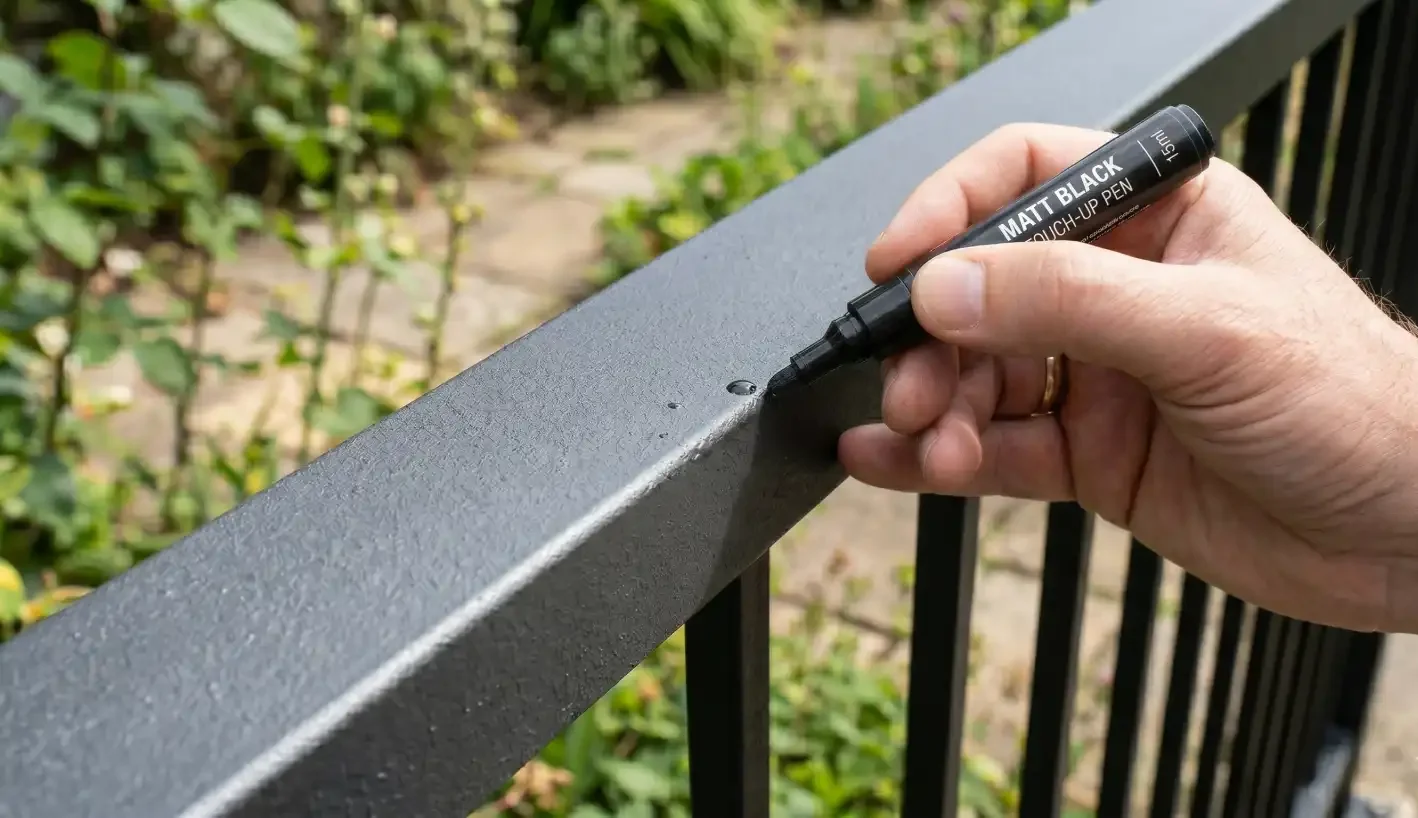
Chip repair
Small chips and deep scratches can be addressed with a touch-up pen for powder coat chips matched to the original Matt Black colour. Touch-up is a practical and recommended first response to chip damage — clean the affected area, allow it to dry fully, and apply the touch-up product according to the manufacturer’s instructions. The repair will not be invisible on close inspection, but it will prevent substrate exposure and halt any potential for moisture ingress. Touch up any chips promptly rather than leaving them.
Grade considerations for Matt Black
The same grade rules that apply to brushed satin and mirror polish apply to Matt Black. The powder coat is a surface coating — it does not change the corrosion resistance of the stainless steel beneath it. In coastal environments within approximately 5km of the shoreline, or in pool surrounds where chlorine exposure is ongoing, the correct substrate is 316 Marine Grade stainless steel, with the Matt Black powder coat applied on top. If the powder coat is compromised in a coastal environment and the substrate is 304 grade, you will have the same chloride-related problems you would have on any exposed 304 component near the sea.
Have a project in mind? Contact the Balustrader team at sales@balustrader.co.za or call +27 64 044 1440 (Mon–Fri, 08:00–17:00).
| Ready to Start Your Project? Get a free DIY estimate and find out exactly what you need. Tell us your project dimensions and we’ll put together a complete component list. www.balustrader.co.za |


