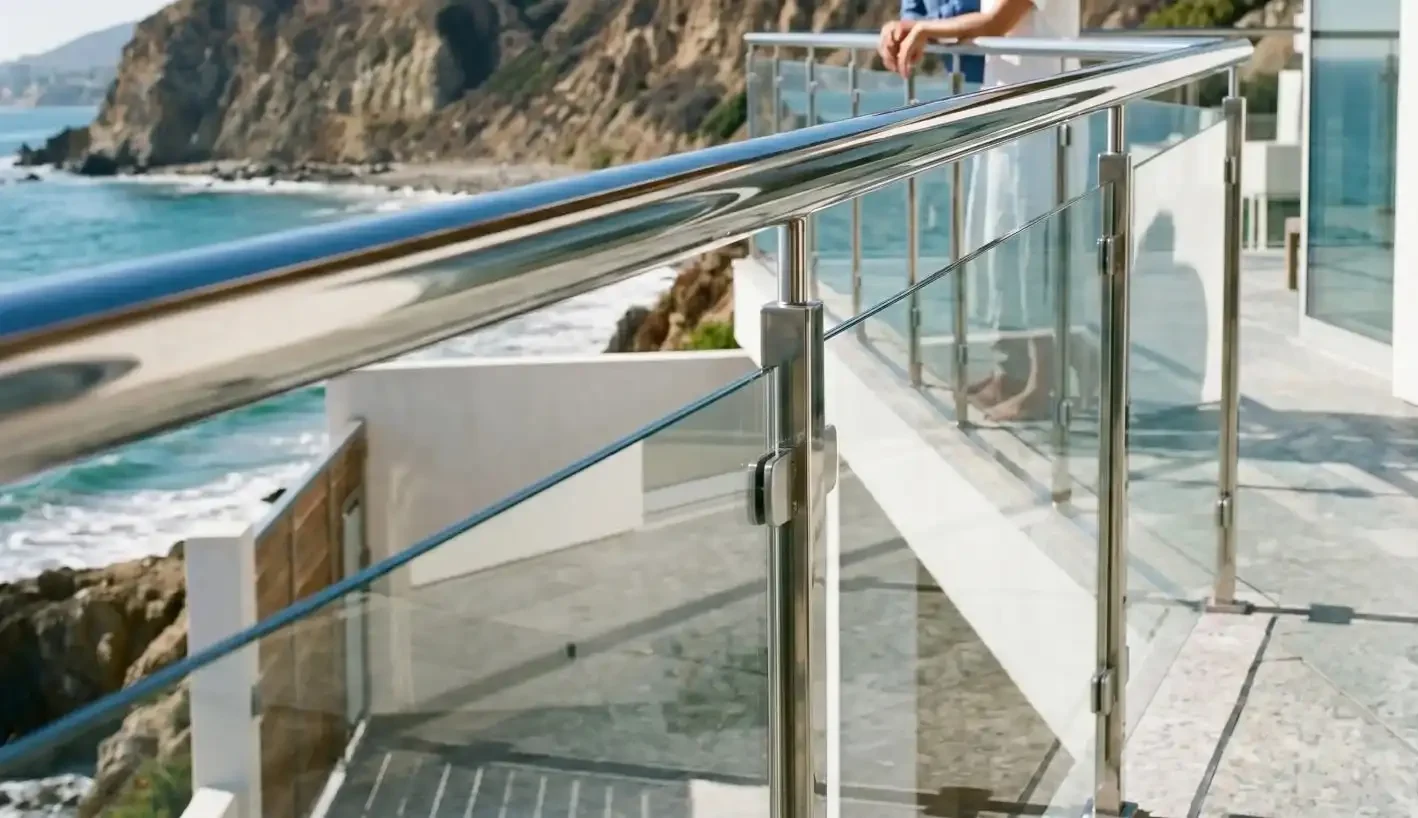
Mirror polish is the most reflective surface treatment available on stainless steel, and it draws attention to itself in a way that no other finish does. In the right setting, a mirror polished balustrade is genuinely striking — the surface reflects its surroundings like a still body of water, and in coastal or high-end residential projects it can become an architectural feature in its own right. But mirror polish also comes with trade-offs that are worth understanding before you commit to it.
What is mirror polish?
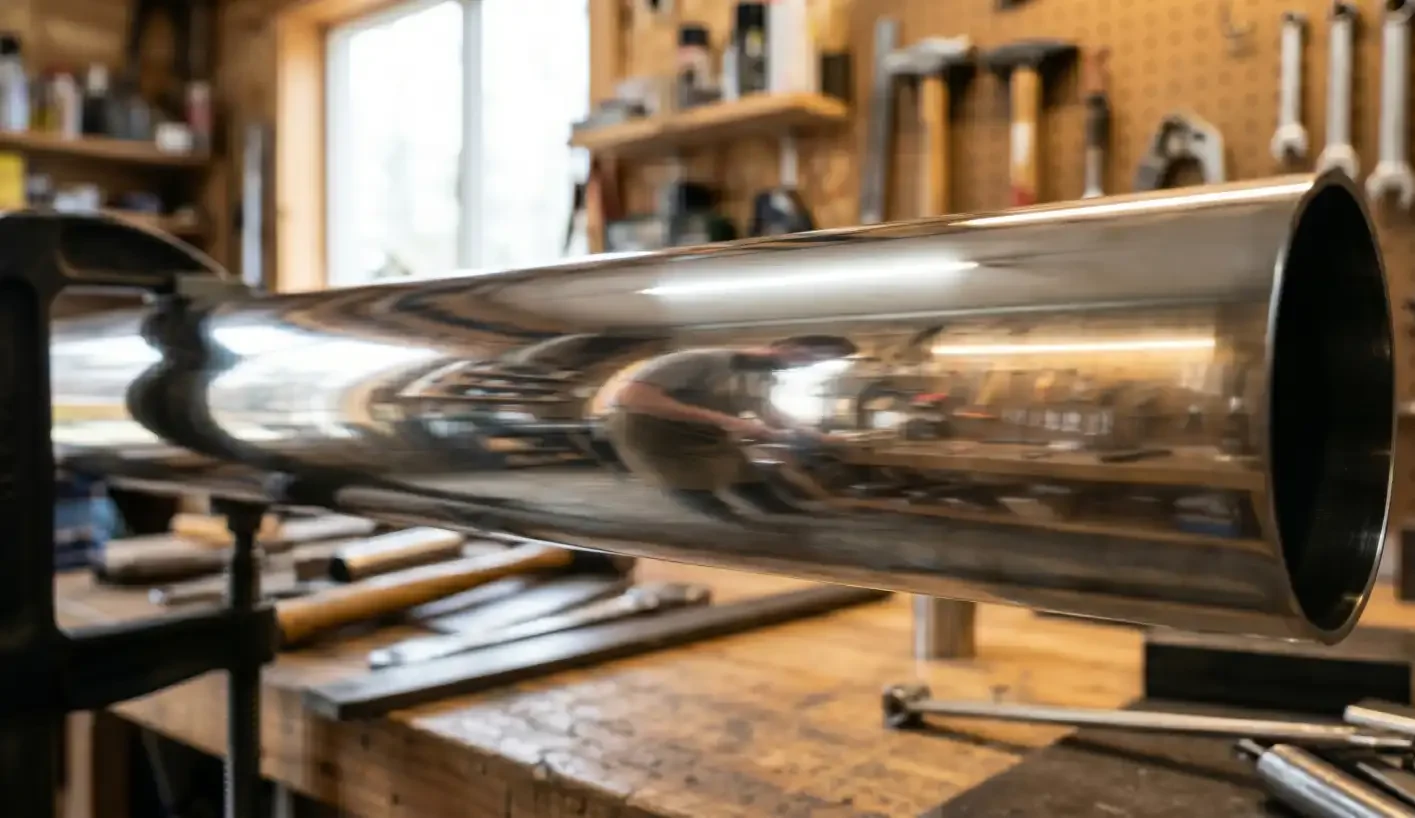
Mirror polish is produced through a multi-stage polishing process that begins with the same abrasive grinding used to create a brushed finish, then works progressively through finer and finer abrasive grades before finishing with a high-speed buff. Each stage removes the micro-scratches left by the previous one. The mirror polishing process eliminates the grain lines of a brushed finish entirely, leaving a surface so smooth it has no detectable directionality and produces a clear, sharp reflection.
The additional work involved in reaching a mirror finish means it costs more than brushed satin to produce. That cost difference is reflected in the price of mirror polished components compared to their brushed equivalents.
The corrosion resistance advantage
There is a practical benefit to mirror polish that goes beyond appearance. Because smoother surface means better corrosion resistance, mirror polish offers improved protection against chloride attack compared to brushed satin. The grain grooves in a brushed finish provide microscopic channels where salt particles and pool chemicals can accumulate and remain in contact with the steel surface — this is the mechanism behind tea staining. A mirror polished surface has no such grooves. Chloride particles land on a smooth, uninterrupted surface and can be wiped away cleanly.
This makes mirror polish a genuinely better choice in coastal and pool environments compared to brushed satin — but it does not change the grade requirement. In any project within approximately 5km of the coast or adjacent to a pool, 316 Marine Grade for coastal and pool environments is required regardless of which finish you choose. A mirror polished 304 component will still underperform in salt air compared to a brushed 316 component. The corrosion resistance advantage of mirror polish is an enhancement on top of correct grade selection — not a substitute for it.
Where mirror polish works best
Mirror polish suits high-end residential and commercial projects where the premium appearance justifies both the higher component cost and the ongoing maintenance commitment. Architectural features such as glass balustrades with mirror polished handrails and balustrade posts, coastal homes where the reflective quality complements the open, bright environment, and entertainment spaces designed for visual impact are all natural settings for mirror polish.
When comparing satin vs mirror polish for outdoor balustrades, mirror polish is generally considered the better finish for coastal applications where aesthetics are a priority and regular maintenance is feasible. In inland, shaded, or working environments, brushed satin typically remains the more practical choice.
The limitations of mirror polish
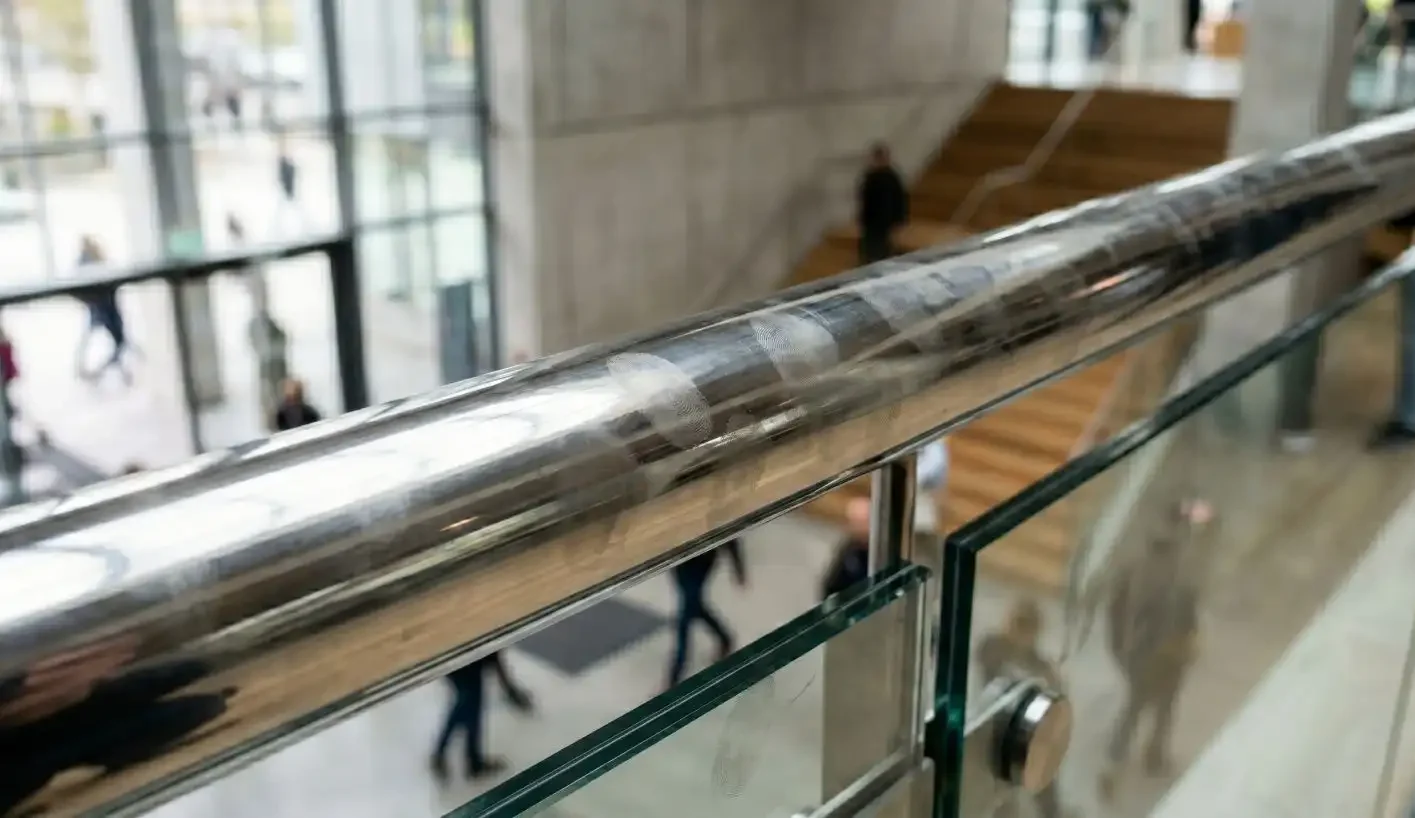
The same smoothness that makes mirror polish corrosion-resistant is also what makes it high-maintenance in terms of appearance. Fingerprints, water spots, and smudges show up immediately on a reflective surface in a way they simply do not on brushed satin. In any area with regular hand contact — a handrail on a staircase, a balustrade adjacent to a pathway — a mirror polished surface will require frequent wiping to look its best.
Scratch repair is also significantly more demanding on a mirror polished surface than on brushed satin. A scratch on brushed satin can often be worked into the grain pattern with a Scotch-Brite pad. On a mirror polished surface, any scratch will stand out sharply against the perfectly smooth surroundings. Proper repair requires working back through multiple abrasive grades to re-establish the correct level of polish around the damaged area — a process that is rarely achievable without professional equipment.
Cleaning mirror polish
The cleaning routine for mirror polish is more frequent than brushed satin but simpler in method — because there is no grain direction to follow. A soft microfibre cloth with a small amount of mild detergent is all that is needed. Dry immediately after cleaning to avoid water spots. In coastal environments, increasing the frequency to at least fortnightly is advisable. Never use abrasive pads, steel wool, or bleach-based products — any of these will damage the surface immediately and permanently.
Is mirror polish right for your project?
Mirror polish is the right choice when visual impact is a priority and you are prepared to maintain it. If your project is in an area with heavy hand traffic, has children running their hands along the handrail, or requires low-maintenance performance over appearance, brushed satin is likely the better fit. If you want the most architecturally distinctive finish available on a coastal home or a high-end deck, and you are willing to keep it clean consistently, mirror polish delivers results that no other finish can match.
Have a project in mind? Contact the Balustrader team at sales@balustrader.co.za or call +27 64 044 1440 (Mon–Fri, 08:00–17:00).
| Ready to Start Your Project? Get a free DIY estimate and find out exactly what you need. Tell us your project dimensions and we’ll put together a complete component list. www.balustrader.co.za |


