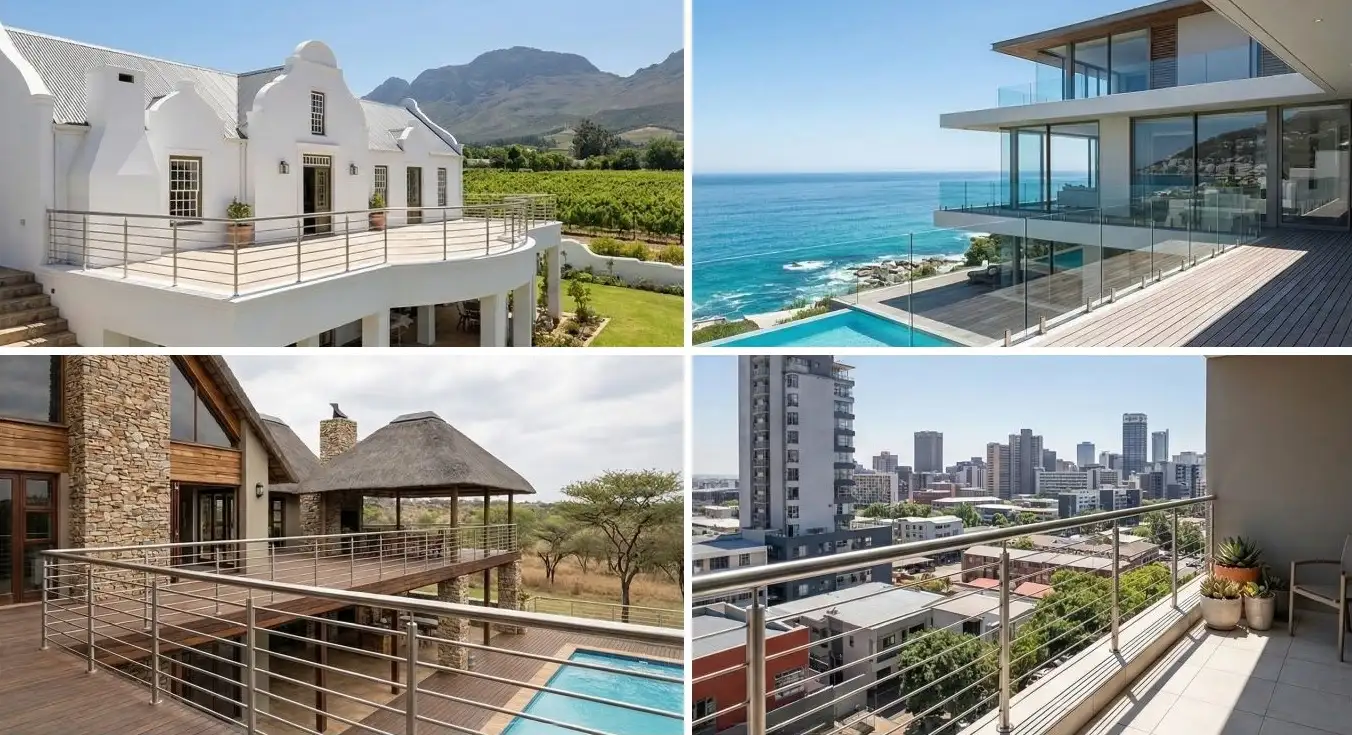
A deck balustrade is one of the most visible architectural elements of an outdoor living space. Get the design right and it elevates the entire area — creating a finished, considered look that adds genuine value to the property. Get it wrong and it can make even a beautifully built deck feel incomplete.
The good news is that stainless steel balustrade components are remarkably versatile. The same bolt-down stanchion system can be configured in multiple ways to produce very different visual outcomes. Here are ten ideas to inspire your project — all achievable as a DIY installation using Balustrader components.
1. Classic Horizontal Round Tube
The timeless choice for most South African homes. Three or four horizontal 50.8mm round tubes between 900mm stanchions create a clean, structured look that complements both contemporary and traditional architecture. In brushed satin finish, this style ages beautifully and is particularly popular in the Western Cape where it suits the clean lines of Cape contemporary homes.
Best for: Most residential styles. Particularly effective on elevated decks with garden views.
2. Frameless Glass for Unobstructed Views
If your deck overlooks a mountain, the ocean, or a beautifully landscaped garden, glass infill is the obvious choice. 12mm toughened glass panels in slotted tube frames provide the safety of a solid barrier with the visual openness of no barrier at all. The stainless steel framing is minimal — top and bottom slotted tubes only — making the glass the dominant visual element.
Best for: Coastal properties, Camps Bay and Atlantic Seaboard homes, properties with significant views.
3. Fine Horizontal Rails for a Contemporary Look
Using 38.1mm tube rather than 50.8mm for the infill rails creates a lighter, more refined visual profile. With five or six rails per bay instead of three or four, the result is a denser, more contemporary look reminiscent of high-end architectural balustrades. The finer tube diameter reads as more sophisticated and is particularly effective on flat-roofed, minimalist homes.
Best for: Contemporary and modernist architecture. Homes with clean lines and minimal ornamentation.
4. Mix of Glass and Tube Panels
There is no rule that says every bay must use the same infill. A popular design approach is to use glass infill on the bays directly in front of the primary seating or viewing position — where you want the clearest sight line — and round tube infill on the remaining bays. This balances the premium aesthetic of glass with the cost efficiency of tube infill.
Best for: Homes with a specific focal view. Budget-conscious homeowners who want some glass without a full glass installation.
5. Mirror Polish for a High-Gloss Statement
All Balustrader tubing and components are available in mirror polish as well as brushed satin. A mirror-polished balustrade has a dramatically different character — reflective, striking, and unmistakably premium. It requires more frequent cleaning to keep fingerprints at bay, but in the right setting — a glamorous Clifton home, a high-end entertainment deck — it is a genuinely spectacular choice.
Best for: High-end residential projects. Coastal homes where the reflective finish complements the water and light. Indoor staircases.
6. Wraparound Deck Balustrade With Corner Stanchions
For decks that wrap around two or more sides of the house, the balustrade needs to follow the perimeter cleanly around each corner. Using dedicated corner stanchions rather than attempting to join two runs at a corner creates a seamless, integrated look that reads as professionally designed. The key is consistent stanchion spacing on all runs so that the corner stanchion does not look out of place.
Best for: Wraparound decks and outdoor entertainment areas with multiple aspects.
7. Integrated Pool and Deck Balustrade
When your deck connects directly to a pool area, integrating the pool fence with the deck balustrade creates a unified outdoor living space rather than two distinct zones divided by a visual barrier. Using the same stanchion profile and infill style throughout ties the space together. Note that the pool fence section must comply with SANS 10134, which has different height and gate requirements — our team can design a layout that satisfies both sets of requirements within a consistent aesthetic.
Best for: Properties where the deck and pool area flow into one another.
8. Staircase and Deck as a Cohesive System
One of the most satisfying results of a well-planned DIY project is a balustrade that runs seamlessly from the deck level down the staircase to ground level, using the same components throughout. The handrail tube continues in an unbroken line from horizontal to raked, and the infill style is consistent. This level of integration makes a DIY installation genuinely indistinguishable from professional work.
Best for: Any property where the deck is accessed via an external staircase.
9. Balustrade as a Garden Boundary
Stainless steel balustrade components are not limited to elevated decks and balconies. A ground-level balustrade can define the boundary of an outdoor entertainment area, create a separation between lawn and paving, or act as an architectural feature in a garden setting. At ground level, the structural requirements are less demanding and the installation is typically simpler — making it an ideal first DIY balustrade project.
Best for: Flat properties with large garden areas. Entertainment areas that need a defined boundary without a solid wall.
10. Black Powder-Coated Finish for a Contemporary Edge
While stainless steel’s natural silver finish is classic, our Matt Black powder-coated stainless steel components offer a dramatically different aesthetic. The base material is still stainless steel — fully corrosion-resistant, fully structural — but the powder-coat finish is a deep, flat black that has become extremely popular in contemporary South African architecture. Black balustrades against white or light grey walls, timber decking, or green landscaping create a striking contrast that photographs exceptionally well and adds a modern, architectural quality to any home.
Best for: Contemporary homes, dark-toned architectural styles, photographers and homeowners who want strong visual contrast.
All ten of these ideas are achievable using Balustrader’s standard component range, available in 304 and 316 grades with nationwide delivery. Browse the full range at www.balustrader.co.za or submit a free DIY Estimate to get a component specification for your specific design.
Get inspired and get started — browse the range at www.balustrader.co.za


