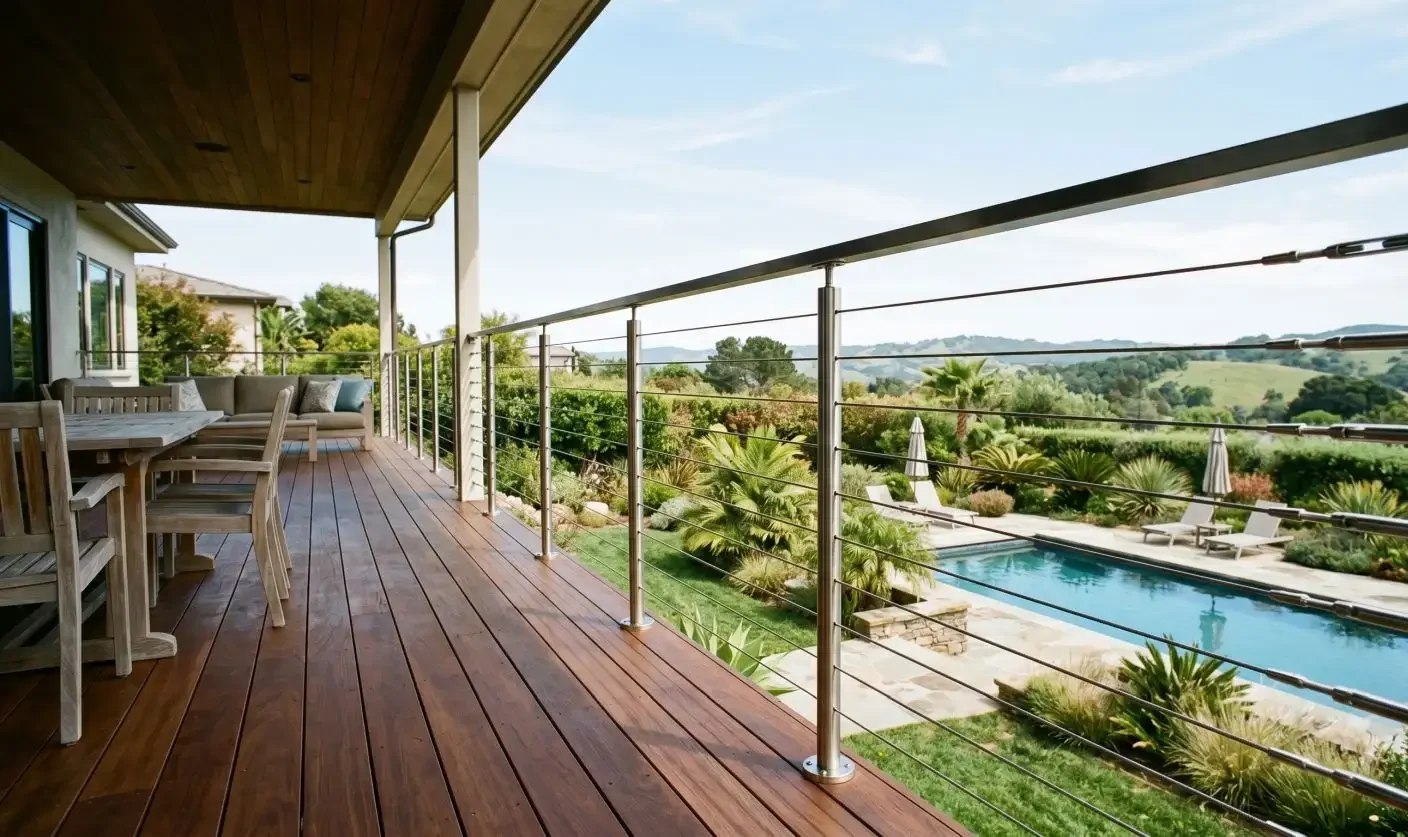
Cable balustrades have grown significantly in popularity over the past decade. The slim stainless steel cables create a near-invisible infill that preserves views almost as completely as glass, while giving the installation a distinctive, contemporary character that suits both coastal homes and modern urban properties.
But cable systems are different from tube infill and glass systems in several important ways — they use different stanchion types, require specific tensioning hardware, and have compliance considerations that don’t apply to tube infill. This complete guide covers everything you need to plan and install a cable balustrade system in South Africa.
How a Cable Balustrade System Works
A cable balustrade system uses horizontal stainless steel cables — typically 3mm or 4mm diameter — tensioned between stanchion posts at specified vertical intervals. The cables replace the horizontal round tubes of a conventional tube infill system. The handrail runs along the top of the stanchions as in any other system.
The cables are attached to the stanchions using one of two primary fixing methods:
Through-hole stanchions with end fittings
The cable passes through a pre-drilled hole in the stanchion body and is terminated at each end of the run with a swage tensioner (one end) and a swage stopper (the other end). The tensioner allows the cable to be pulled tight after installation.
Side-mounted bolt stanchions
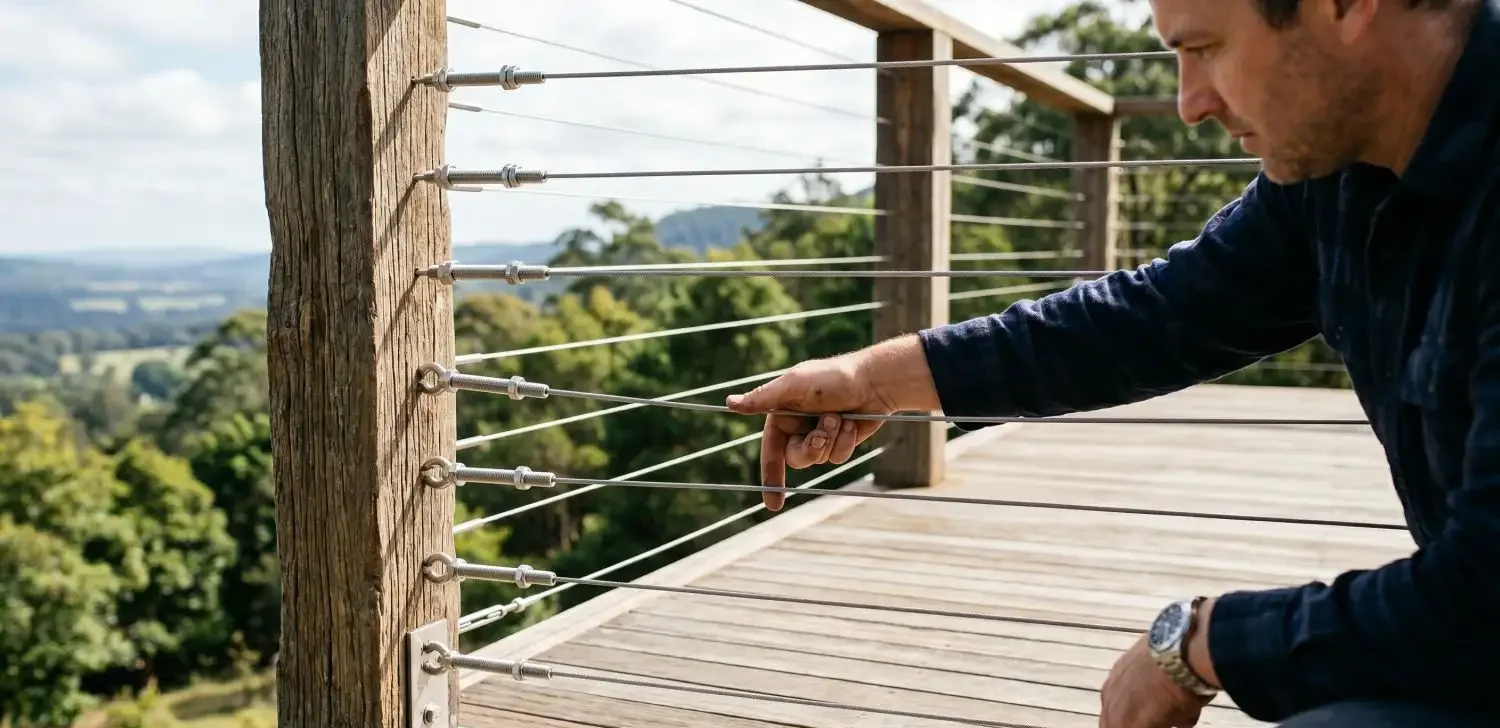
The cables are attached to the side face of the stanchion using threaded bolt fittings. More commonly used where stanchion spacing is variable or where the cable needs to change direction at an angle.
Cable Balustrade Components
Stanchions
Cable system stanchions are machined specifically for cable — they are not interchangeable with round tube stanchions. The full range of straight, corner, end, and stair rake variants are available in cable-appropriate configurations.
Cable
Stainless steel cable for balustrade applications is available in 3mm and 4mm diameters. 4mm is the standard specification for domestic balustrade infill. Cable is sold per linear metre. Calculate your required length by multiplying the number of cable rows by the run length, then add 300–400mm per end for termination and tensioning.
Swage tensioners
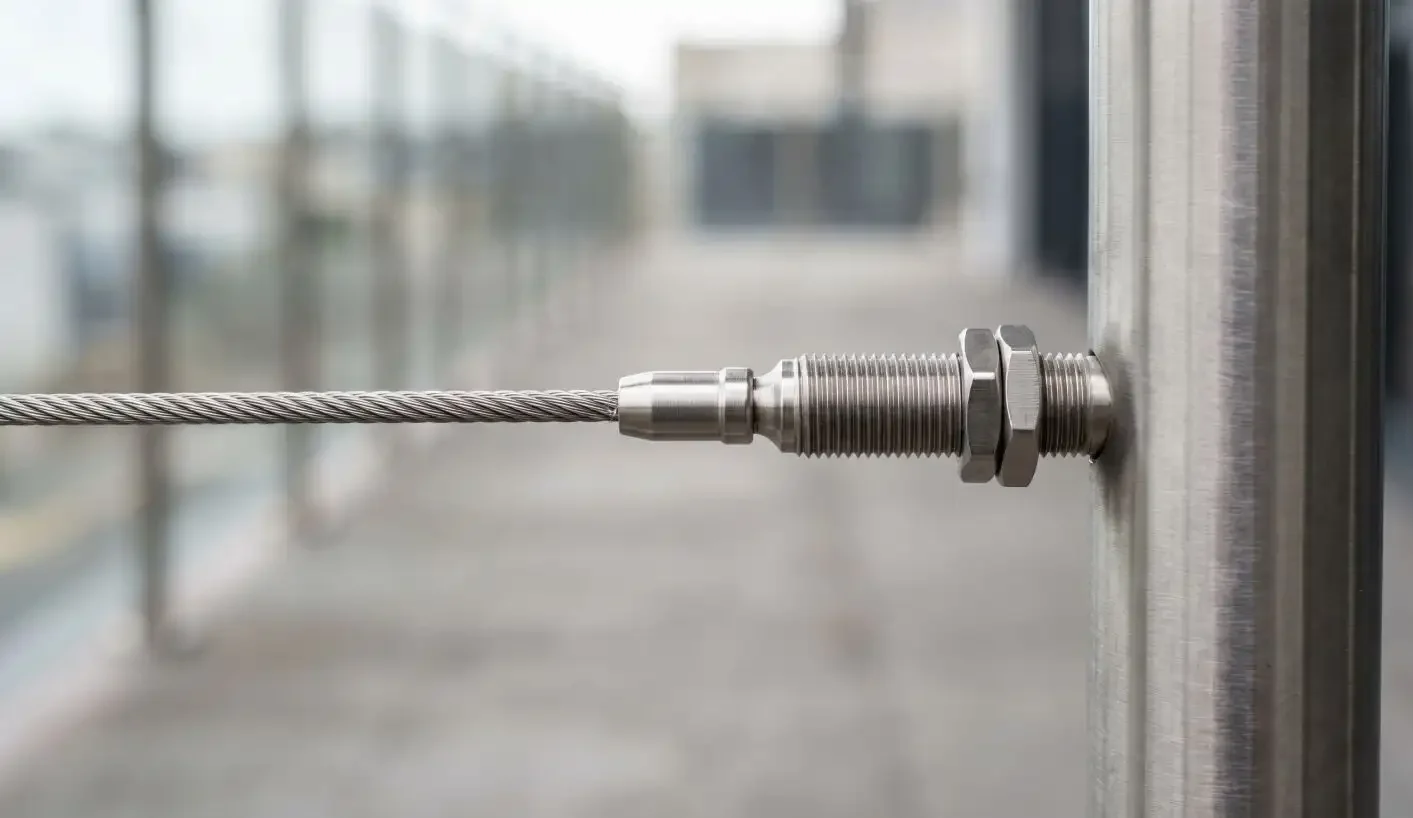
The swage tensioner is threaded and fits into the end stanchion or wall fitting. Turning the tensioner draws the cable tight. Each cable run requires one tensioner at one end.
Swage stoppers
The swage stopper terminates the far end of the cable. It is crimped (swaged) onto the cable end using a swage tool. All tension adjustment is done at the tensioner end.
Angle fittings
Where a cable changes direction at a corner stanchion, angle fittings allow the cable to turn without kinking. Essential for maintaining cable appearance and structural integrity around corners.
Why 316 Marine Grade Is Particularly Important for Cable Systems
Cable systems expose significantly more surface area of stainless steel to the environment than tube infill — a 10-metre run with six cable rows has approximately 60 linear metres of cable surface exposed to the elements. In coastal or pool environments, this dramatically increases the potential for chloride attack.
316 Marine Grade stainless steel cable and fittings are non-negotiable for any coastal property, pool surround, or high-humidity environment. Even for inland properties where 304 grade is generally acceptable for tube infill, we recommend considering 316 Marine Grade for cable systems due to the greater surface area exposure.
SANS 10400-M Compliance for Cable Systems
Cable balustrades must comply with the same national standards requirements as any other balustrade system. The South African Bureau of Standards publishes and maintains SANS 10400-M, which sets the following requirements relevant to cable systems:
- Minimum handrail height of 1,000mm from finished floor or deck surface
- No infill opening larger than 100mm — cable spacing must account for maximum sag under load
- Non-climbability — horizontal cables within the lower 900mm can potentially serve as footholds. Check your local municipal by-laws for pool fencing cable applications.
- Structural load resistance of 0.74 kN/m horizontal load — cable tension and stanchion fixing specification must meet this requirement
Cable sag is a compliance consideration unique to cable systems. Maximum unsupported cable span is typically 1,200mm. For longer spans, intermediate stanchions or cable guides are required.
Tensioning Your Cable System
- Thread the cable through all stanchion holes before fitting any end hardware — do not cut the cable first.
- Fit the stopper swage fitting to the far end of the cable using a swage tool. Ensure the swage is fully seated and crimped.
- Thread the tensioner onto the near end and fit into the end stanchion or wall fitting.
- Hand-tighten the tensioner until the cable is approximately hand-tight. Repeat for all cable rows before final tensioning.
- Final-tension each cable in sequence from bottom to top. Allow cables to settle for 24 hours, then re-tension as necessary.
Cable vs Tube vs Glass: Which Is Right for You?
Cable infill sits between tube infill and glass infill in terms of both cost and visual openness. It preserves views significantly better than tube infill while costing less than a full glass system. For properties with strong views where tube infill feels too visually heavy but glass infill is outside budget, cable is the natural middle ground.
Contact us: sales@balustrader.co.za | +27 64 044 1440 | www.balustrader.co.za
Get your cable balustrade specified and costed — free DIY Estimate at www.balustrader.co.za


