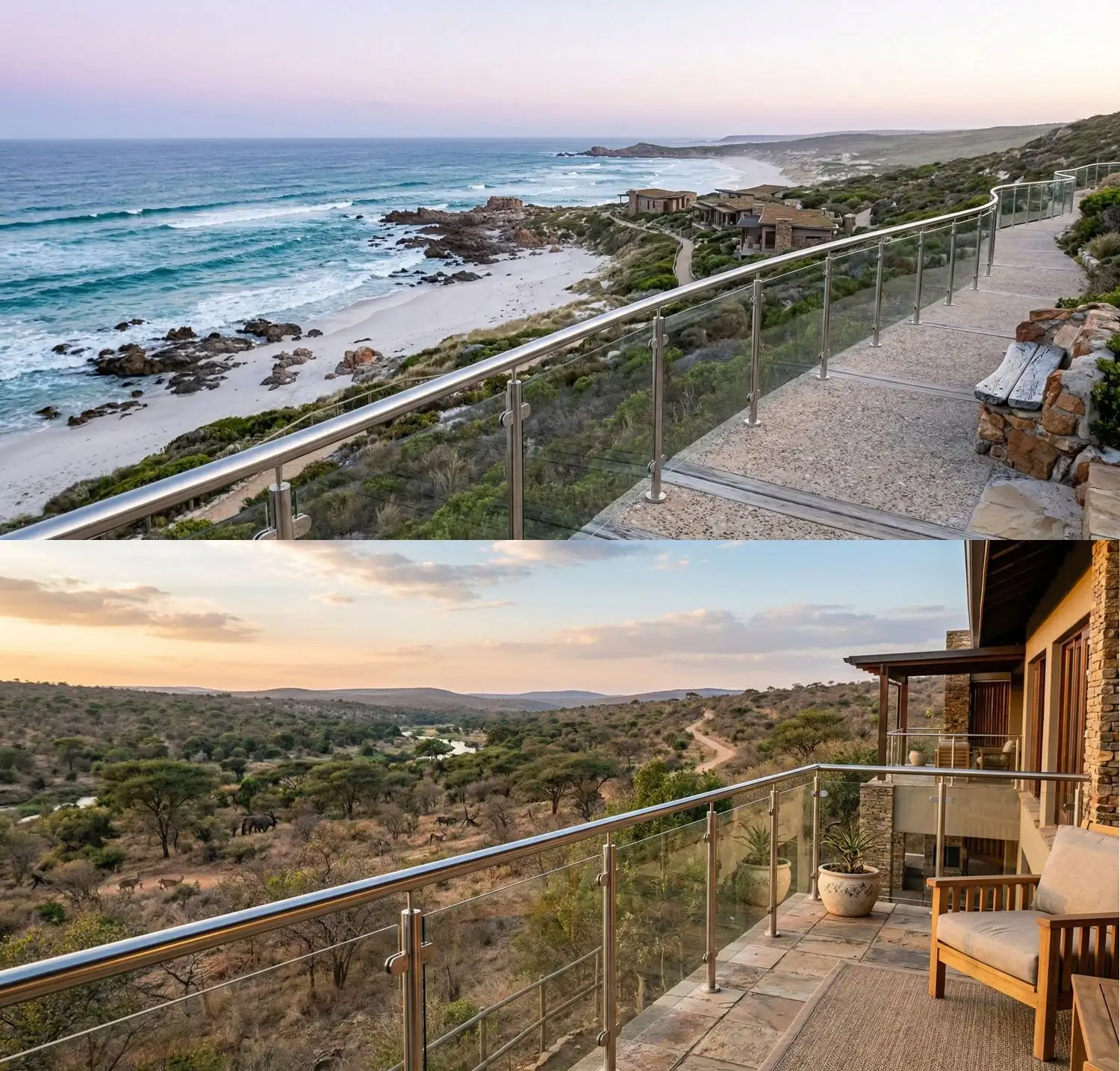
If you’ve started researching stainless steel balustrade components, you’ve almost certainly come across two grades: 304 and 316. At first glance they look identical — same silver finish, same strength, similar price point. So why does the grade matter, and which one should you be ordering?
The answer comes down to one thing: where you live. Get the grade right and your balustrade will look pristine for decades. Get it wrong and you could be dealing with rust, staining, and costly replacements within a few years — particularly here in South Africa, where our coastal conditions are among the most corrosive in the world.
In this guide, we’ll break down everything you need to know about 304 and 316 stainless steel so you can order with confidence.
What Is Stainless Steel, and Why Does the Grade Matter?
Stainless steel is an alloy of iron, chromium, and other elements. The chromium content — typically around 10–11% minimum — is what gives it the ability to resist rust by forming a passive oxide layer on the surface. Different grades adjust the blend of elements to optimise for specific performance characteristics.
For balustrades and outdoor architectural components, the two most relevant grades are 304 and 316, both of which fall within the austenitic family — the most widely used category of stainless steel in construction and architectural applications.
304 Stainless Steel: The Industry Standard for Inland Use
Grade 304 is the most commonly used stainless steel in the world. It typically contains 18% chromium and 8% nickel (which is why you’ll sometimes see it referred to as 18/8 stainless). It offers excellent corrosion resistance in most everyday environments, is easy to fabricate, and is available in a wide range of tube profiles and fittings.
Where 304 is the right choice:
- Inland properties — Johannesburg, Pretoria, Bloemfontein, and surrounding areas
- Western Cape areas well away from the coastline — Stellenbosch, Paarl, Worcester, and similar inland towns
- Indoor applications such as interior staircases and mezzanine railings
- Properties in urban and suburban settings with no direct salt air exposure
In these environments, 304 will give you outstanding durability and a clean, professional appearance for many years — at a lower cost than its marine-grade counterpart.
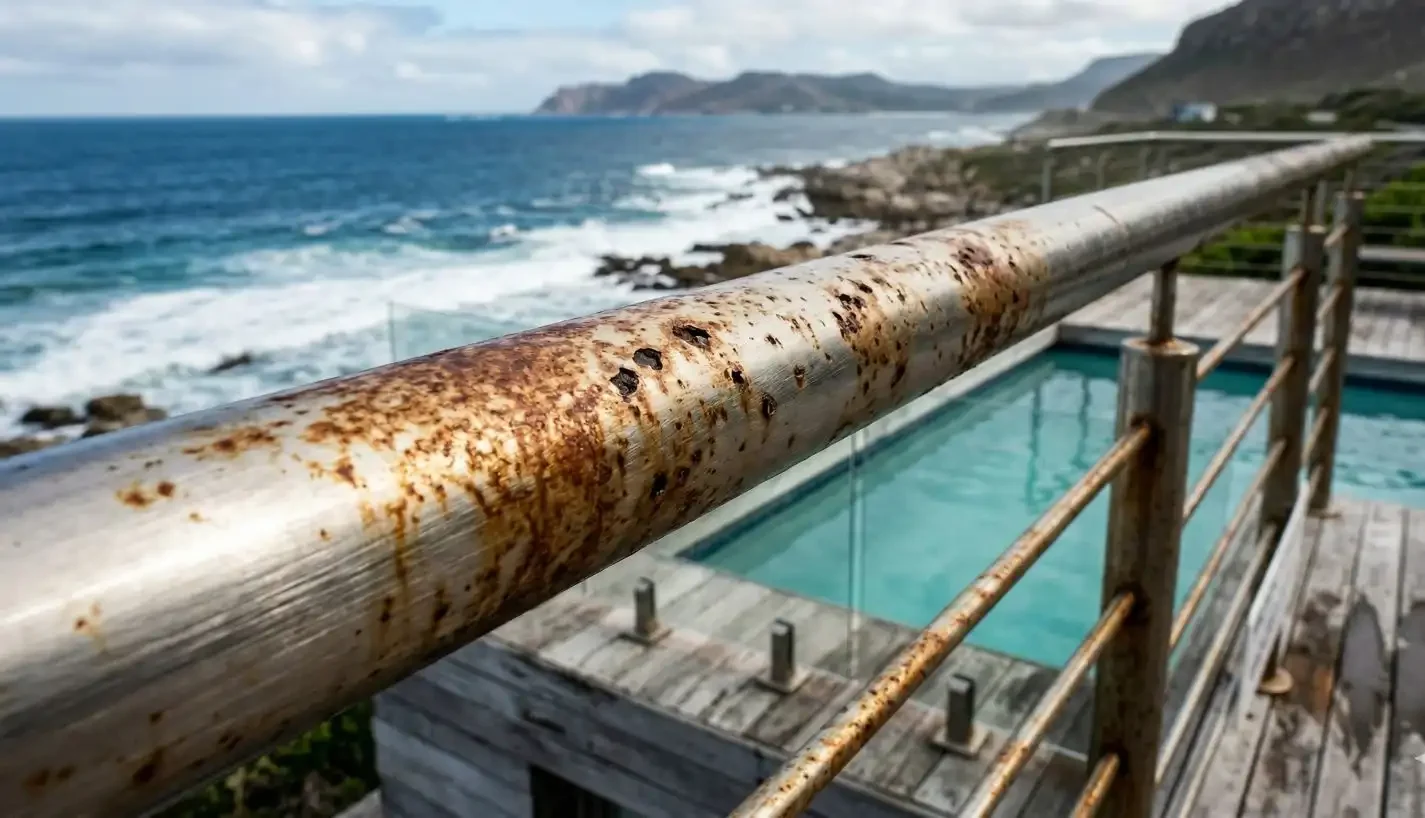
Where 304 falls short:
The weakness of 304 stainless steel is its susceptibility to chloride attack. In environments with high salt content in the air — coastal regions, pools with heavy chlorine exposure, or industrial areas — the passive oxide layer can break down, leading to pitting corrosion and the reddish-brown staining that most homeowners want to avoid at all costs.
316 Stainless Steel: Marine Grade for Coastal and High-Exposure Environments
Grade 316 takes the 304 formula and adds 2–3% molybdenum. This seemingly small addition makes a significant difference: molybdenum dramatically improves resistance to chloride corrosion, which is why 316 is the grade of choice for marine environments, coastal construction, and chemical processing.
Where 316 is the right choice:
- Coastal properties in Cape Town (Atlantic Seaboard, False Bay, West Coast)
- Any property within approximately 5 km of the ocean, particularly those directly exposed to prevailing sea winds
- Pool surrounds and pool area balustrades regardless of location
- Properties in high-humidity coastal environments such as Durban, Knysna, Plettenberg Bay, and Mossel Bay
- Marine or harbour-adjacent installations
If you are in Cape Town and your property has any kind of sea view or is exposed to the southeaster or north-westerly winds off the Atlantic or False Bay, we would always recommend 316 Marine Grade without hesitation. The additional investment upfront is far less than the cost of premature corrosion and replacement.
The Practical Difference in Cost
316 stainless steel commands a price premium over 304, typically in the range of 20–35% more per linear metre of tube. For a standard 8-metre deck balustrade project, this translates to a meaningful but manageable cost difference — and one that is easily justified when you consider the lifespan difference in a coastal environment.
For inland projects, the additional expenditure on 316 is generally unnecessary. In a low-chloride environment, 304 will perform comparably over its lifetime and the cost difference is better invested elsewhere in your project.
How to Tell Them Apart
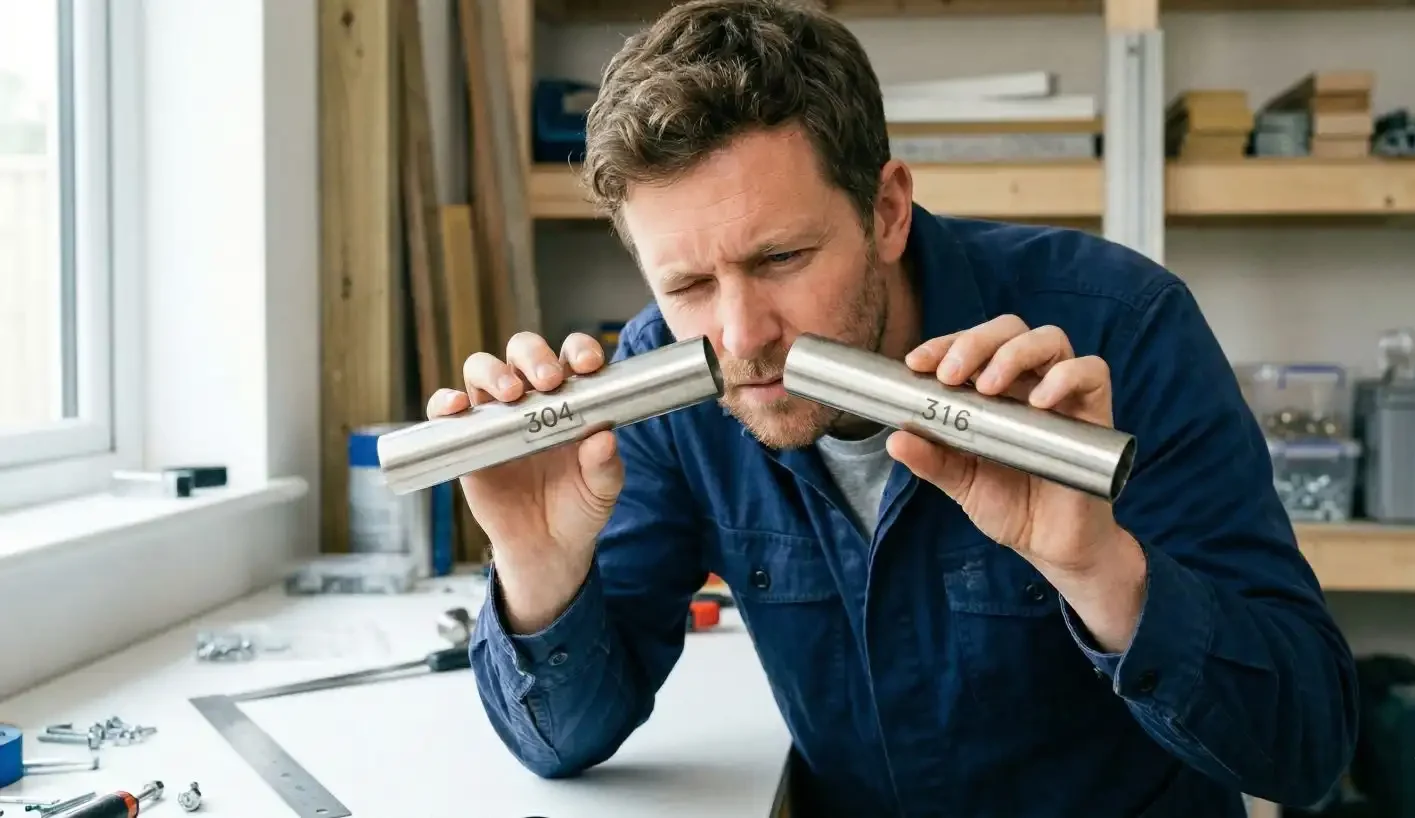
Here is the honest answer: visually, you cannot reliably distinguish 304 from 316 on a polished tube. They look identical. This is why it is so important to order from a supplier you trust — one who can confirm the grade in writing and who sources their material from reputable mills.
At Balustrader, all of our tubing and fittings are clearly identified by grade, and our team will always guide you towards the correct specification for your specific location and application. We never substitute grades, and we are happy to provide material grade confirmation on request.
Quick Reference: 304 vs 316 at a Glance
| Feature | Grade 304 | Grade 316 (Marine) |
| Chromium content | ~18% | ~16–18% |
| Molybdenum | None | 2–3% |
| Corrosion resistance | Good (inland) | Excellent (coastal/marine) |
| Best for | Inland & suburban | Coastal, pools, marine |
| Relative cost | Standard | ~20–35% premium |
| Appearance | Bright silver polish | Identical finish |
What About Other Grades?
You may occasionally see other grades mentioned — 201, 430, or duplex stainless steels — particularly on imported components or budget fittings. For balustrade applications, we strongly recommend sticking to 304 or 316 austenitic grades. Lower grades such as 201 or 430 have significantly reduced nickel content, which compromises both corrosion resistance and long-term appearance.
All Balustrader components are supplied in 304 or 316 stainless steel only. We do not stock or recommend inferior grades for structural balustrade applications.
Still Not Sure Which Grade You Need?
If you’re unsure about which grade is right for your specific property and location, our team is here to help. We’ve been supplying stainless steel balustrade components across South Africa for over 15 years, and we know the specific conditions of every major region — from the corrosive salt air of the Cape Point coast to the dry highveld heat of the Gauteng interior.
Get in touch with us at sales@balustrader.co.za or call +27 64 044 1440, or use our DIY Estimate service at www.balustrader.co.za to get expert grade guidance alongside a full component estimate for your project.


